

Pakistan is once again at the center of U.S. diplomacy, even as American officials remain deeply divided over whether the country can be trusted.
As tensions with Iran continue, Pakistan’s army chief, Field Marshal Asim Munir, has emerged as a key intermediary in talks aimed at preventing the conflict from escalating further.
The role has placed Pakistan back in a familiar and uncomfortable position: a country Washington often distrusts, but repeatedly turns to during major regional crises.
President Donald Trump has praised Pakistan’s leadership, saying the country’s officials have been helpful in efforts to calm the Iran crisis.
TRENDING TODAY


Trump specifically credited Prime Minister Shehbaz Sharif and Field Marshal Munir for their role as mediators.
But not everyone in Washington is convinced.
Sen. Lindsey Graham said he does not trust Pakistan, especially after allegations surfaced that Iranian military aircraft may have been moved into Pakistani territory during the conflict. Islamabad has denied those claims.
Graham warned that if Pakistan was helping protect Iranian military assets, the U.S. should consider finding another mediator.
The disagreement reflects a decades-long contradiction in American foreign policy.
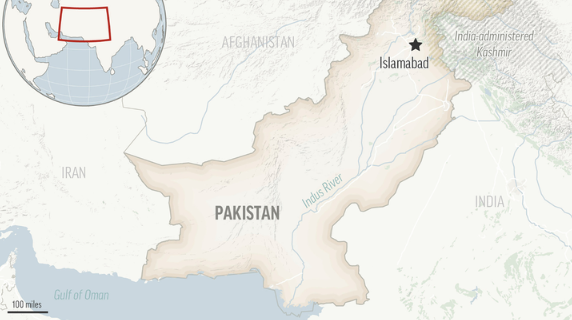
Pakistan is strategically important because of its location, nuclear arsenal, military power and regional connections. It borders Iran and Afghanistan and maintains influence across several of the region’s most sensitive security networks.
That makes Pakistan useful to Washington.
But it also makes Pakistan controversial.
U.S. distrust intensified after American forces killed Osama bin Laden in Abbottabad, Pakistan, in 2011. Bin Laden had been living near Pakistan’s premier military academy, raising lasting questions about whether elements of the country’s security establishment knew he was there.
Pakistan has denied knowingly sheltering him.
American officials and analysts have also accused Pakistan of playing a double game during the war in Afghanistan, publicly cooperating with the U.S. while elements of its security establishment tolerated or supported Taliban-linked groups.
Critics say Pakistan viewed Afghanistan through the lens of its rivalry with India and saw the Taliban as a way to maintain strategic influence.
Pakistani officials argue their country also paid a heavy price for the post-9/11 conflict, suffering years of terrorist attacks, insurgent violence and internal instability.
Pakistan’s nuclear history has also fueled concern in Washington.
Abdul Qadeer Khan, the architect of Pakistan’s nuclear program, later admitted operating a proliferation network that transferred nuclear technology to countries including Iran, Libya and North Korea.
Despite all of this, Washington has repeatedly found it difficult to sideline Pakistan.
The country’s military still holds major influence, and its regional relationships can make it valuable during diplomatic crises.
That is why Pakistan is now being used again as a channel during the Iran crisis.
Munir, a former intelligence chief, appears to be positioning Pakistan as a stabilizing force and diplomatic bridge between Washington and Tehran.
Pakistan is not the only mediator involved. Qatar has also played a major role in talks, especially on diplomatic and financial issues.
Qatar previously hosted U.S.-Taliban negotiations that led to the 2020 Doha agreement, while Pakistan also played a behind-the-scenes role because of its longstanding Taliban connections.
Now, analysts say Pakistan and Qatar may be functioning as parallel channels in the Iran talks.
Pakistan offers military and regional-security access, while Qatar provides formal diplomatic space and financial negotiation channels.
For Trump, the calculation appears practical.
Even if Pakistan is complicated and controversial, it may have access and influence that the U.S. needs during a volatile moment.
The risk is that Pakistan’s own interests may not always align with Washington’s.
The current debate shows why Pakistan remains one of America’s most complicated partners: too important to ignore, too mistrusted to fully embrace.
Why It Matters
Pakistan’s role in the Iran crisis shows how U.S. foreign policy often depends on imperfect partners. Trump may see Islamabad as useful for de-escalation, but Pakistan’s history with the Taliban, Iran, nuclear proliferation and militant networks makes the relationship politically explosive in Washington.
What Comes Next
Pakistan’s role will likely face more scrutiny if Iran talks continue. If Islamabad helps move negotiations forward, Trump may credit Pakistan as a key mediator. If new evidence emerges that Pakistan aided Iran militarily, critics will demand Washington look elsewhere.
A related post highlighted Trump’s push for Muslim-majority countries to join the Abraham Accords as Iran negotiations continue.
Trump wants every major Muslim country, including Pakistan, into the Abraham Accords. So what’s it going to be for Asim Munir’s Pakistan — recognize Israel, or lose Trump’s favour? pic.twitter.com/R2LFuoLUyZ
— Adil Raja (@soldierspeaks) May 25, 2026





