An analyst said Xi appears to be taking a long-term approach focused more on strategic patience than making major compromises.
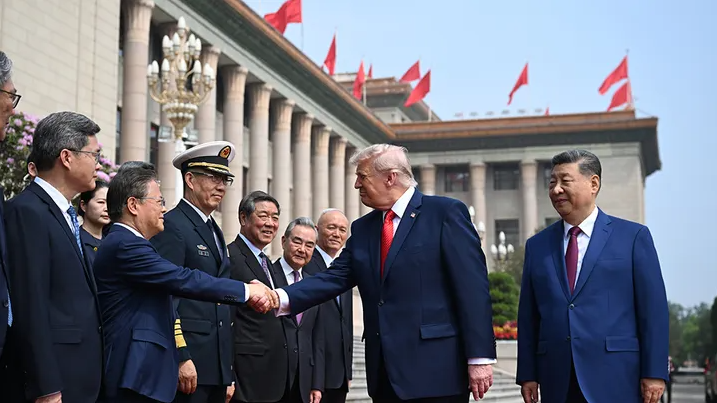
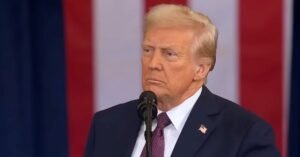
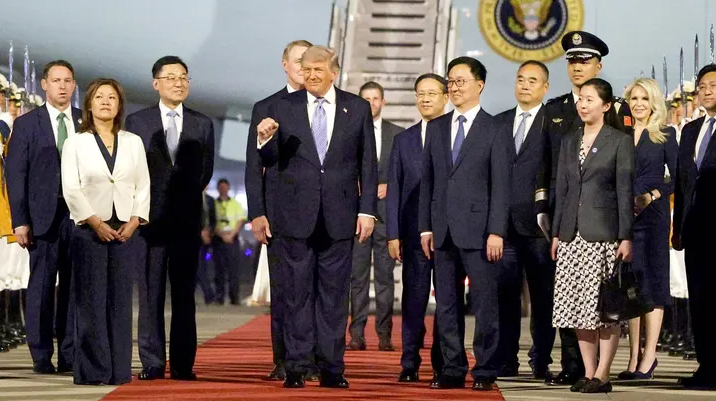
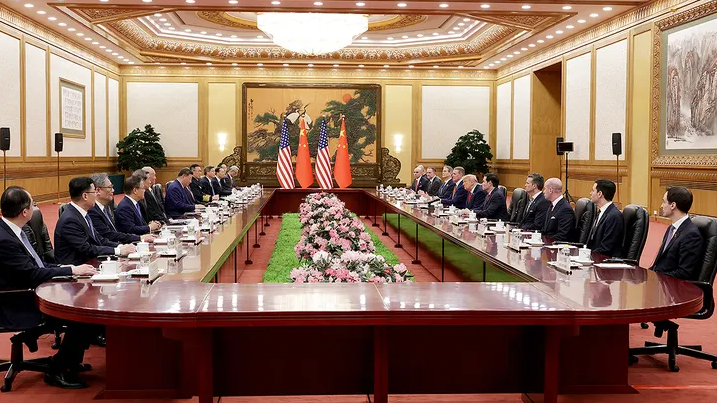
President Donald Trump arrived in Beijing for a major summit with Chinese President Xi Jinping as both the United States and China attempt to manage one of the world’s most important geopolitical rivalries without backing down on deeper strategic disagreements.
The two-day visit marks Trump’s first trip to China since 2017 and comes during rising tensions surrounding trade, artificial intelligence, Taiwan and the global impact of the Iran conflict. While the White House has presented the summit as an opportunity to secure new economic agreements and reshape the U.S.-China relationship, analysts believe Beijing’s goals are far more strategic and long-term.
“Trump is looking for visible momentum and major agreements ahead of the midterm elections,” said Zongyuan Zoe Liu, senior fellow for China studies at the Council on Foreign Relations. “Xi appears focused on long-term strategy and patience rather than major compromises.
TRENDING TODAY

Issues expected to dominate the summit include trade, aerospace, agriculture and energy cooperation, along with discussions surrounding a possible U.S.-China Board of Trade and Board of Investment, according to White House officials.
White House spokeswoman Anna Kelly said Trump’s objective is to secure strong agreements for the United States while continuing to protect national security interests.
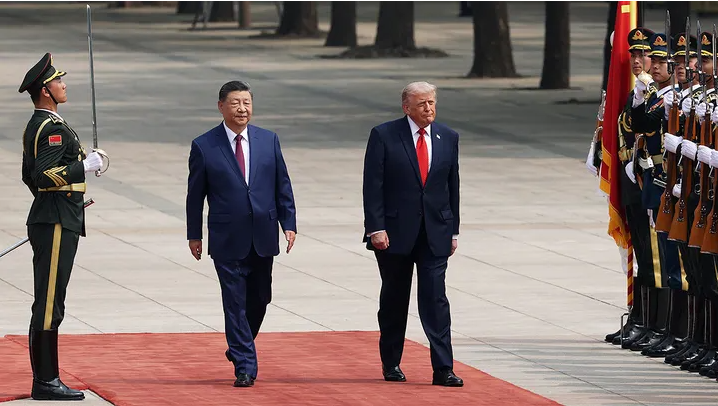
Trump participated in an official welcome ceremony and bilateral meeting with Xi Thursday morning in Beijing. The schedule also included a visit to the Temple of Heaven alongside the Chinese president and a formal state banquet later in the evening.
Chinese Embassy spokesperson Liu Pengyu said Beijing sees the summit as an important opportunity to stabilize relations between the world’s two largest economies.
“Heads-of-state diplomacy plays a critical role in guiding China-U.S. relations,” Liu said in a statement. “China welcomes President Trump’s visit and is prepared to expand cooperation while managing differences through mutual respect, equality and shared interests.”
Analysts say Xi’s primary objective is likely preventing further escalation with Washington while giving China more time to manage its slowing economy, which continues to face weak domestic demand, industrial overcapacity and deflationary pressure.
A recent report from the U.S.-China Economic and Security Review Commission warned that Beijing is continuing to rely heavily on state-backed industrial policies despite deeper structural problems within the Chinese economy.
According to the report, China is increasingly operating as a “two-speed” economy, where industries favored by the Chinese Communist Party continue receiving massive government support while broader areas of the economy struggle with stagnation.
The commission also warned about what it called a potential “China Shock 2.0,” arguing that China’s massive industrial output and record trade surplus are disrupting global markets while increasing international dependence on Chinese supply chains involving batteries, pharmaceuticals, semiconductors and artificial intelligence technology.
“Chinese policy aims to reduce reliance on foreign technology while simultaneously increasing the world’s dependence on China,” the report stated.
At the same time, Xi enters the summit with additional leverage due to the ongoing Iran crisis and instability in global energy markets.
Trump has faced growing political pressure at home over rising energy costs linked to tensions in the Middle East and security threats near the Strait of Hormuz. China, meanwhile, remains one of Iran’s largest oil buyers and maintains close diplomatic ties with Tehran.
Susan Thornton, former acting assistant secretary of state for East Asian and Pacific affairs during Trump’s first administration, recently said expectations for major breakthroughs at the summit should remain limited despite its significance.
“The biggest value may simply come from the fact that the meeting itself is happening,” Thornton explained during a Stanford University Asia-Pacific Research Center discussion.
She also suggested that Beijing may quietly view America’s growing involvement in the Middle East as strategically beneficial, since it could divert Washington’s attention away from China.
“It feels like China is standing back and waiting to see how events unfold,” Thornton said.
Agriculture could become one area where both sides announce measurable progress.
According to a Reuters report published Tuesday, the White House has been pushing China to increase purchases of American farm products ahead of the summit, particularly soybeans and grain exports.
However, traders and analysts told Reuters that China may be reluctant to commit to major soybean purchases because of weaker domestic demand and lower-cost alternatives from Brazil. Instead, experts believe agreements involving corn, wheat, sorghum, beef and poultry products are more likely.
More than a dozen American business executives joined Trump during the trip, including leaders from agricultural company Cargill.
Despite the summit’s focus on trade and global tensions, advocates for victims of religious persecution in China are urging the administration not to ignore Beijing’s treatment of religious groups and political dissidents.
Before the summit, Trump publicly promised to raise the case of imprisoned Chinese pastor Ezra Jin after advocacy efforts led by his daughter, Grace Jin Drexel, who accused Chinese authorities of targeting Christians.
Former U.S. officials told Fox News Digital they remain doubtful that human rights concerns will play a major role during talks primarily focused on reducing tensions and stabilizing economic relations.
Taiwan and technology restrictions are also expected to remain major issues during the meetings. Beijing continues opposing U.S. military support for Taiwan, while Washington has tightened export restrictions targeting China’s advanced semiconductor and artificial intelligence industries.
Still, despite growing competition between the two global powers, neither side appears interested in direct confrontation.
For Trump, the summit offers an opportunity to showcase economic progress and diplomatic leadership ahead of the 2026 midterm elections.
For Xi, analysts say, the objective is more cautious and strategic: maintain stability, avoid escalation and continue positioning China for a prolonged geopolitical competition with the United States.