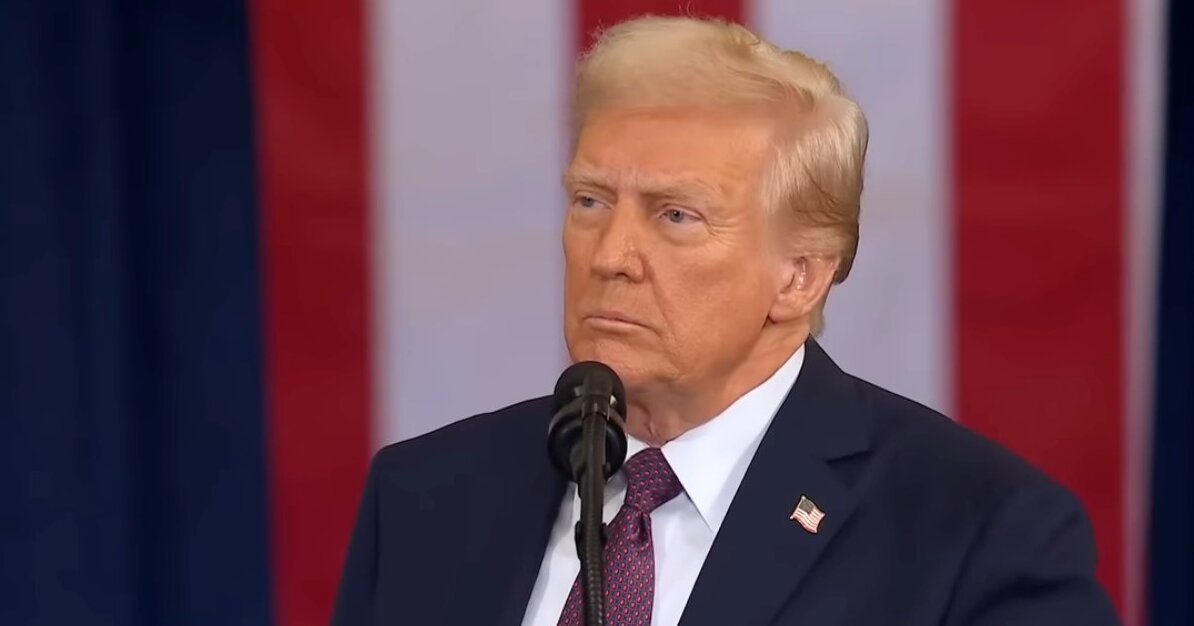
President Donald Trump is not on the ballot in Tuesday’s Republican runoff elections, but his influence over the GOP is facing another major test in closely watched races in Georgia and Alabama.
Trump-backed candidates are competing in high-stakes contests for Senate and gubernatorial nominations, with some facing rivals supported by other major Republican figures, including Georgia Gov. Brian Kemp and Sen. Ted Cruz. The outcomes could shape the midterm election landscape and offer another measure of how much weight Trump’s endorsement still carries inside the Republican Party.
The most closely watched race is in Georgia’s Republican Senate runoff, where Rep. Mike Collins is facing former college football coach Derek Dooley. Trump endorsed Collins in the final stretch of the campaign, giving the congressman a major boost among MAGA voters.
Collins, a strong Trump supporter who represents Georgia’s 10th Congressional District, said the endorsement showed the president’s confidence in his ability to win. He rejected the idea that Trump’s backing came too late, arguing that the president knows when to intervene in a race.
TRENDING TODAY

Dooley, meanwhile, is backed by Kemp, one of Georgia’s most influential Republicans. A former University of Tennessee football coach and the son of legendary University of Georgia coach Vince Dooley, he has campaigned as an outsider and said the endorsement that matters most is from Georgia voters.
The winner will face Democratic Sen. Jon Ossoff in the general election. Republicans view Ossoff as one of the most vulnerable Democratic senators up for re-election, making Georgia a top battleground in the fight for control of the Senate. But while Republicans have spent months battling each other, Ossoff has built a major fundraising operation that could give him an early advantage in the general election.
Trump’s endorsement power is also being tested in Georgia’s Republican gubernatorial runoff. Lt. Gov. Burt Jones, who received Trump’s support last year, is facing billionaire businessman Rick Jackson. Jackson has spent more than $100 million of his own money on the campaign and has tried to frame himself as a Trump-style outsider and businessman.
Jones has also gained support from Kemp, who made a late endorsement and said he believes Jones is best positioned to keep Georgia in Republican hands. Kemp warned that the party cannot afford to lose the governor’s race in November.
Jackson, however, received a late endorsement from Sen. Ted Cruz, who joined him on the campaign trail. Cruz said he was backing candidates he believed were strong conservatives who could win. Jones responded by arguing that he would rather have Trump’s endorsement than support from out-of-state senators.
The winner of the GOP gubernatorial runoff will face former Atlanta Mayor Keisha Lance Bottoms, who won the Democratic nomination outright.
In Alabama, Trump is supporting Rep. Barry Moore in the Republican Senate runoff. Moore is facing Jared Hudson, a former Navy SEAL sniper and law enforcement figure who is running as an outsider. The winner will be heavily favored in November in the race to succeed Republican Sen. Tommy Tuberville, who is running for governor instead of seeking re-election.
Moore has deep ties to Trump’s movement and was one of the early political figures to back Trump’s first presidential campaign. He also has endorsements from Vice President JD Vance and Senate Majority Leader John Thune. Hudson has support from several conservative figures and groups, including gun-rights activists and prominent right-wing personalities.
The runoffs come after several weeks in which Trump-backed candidates have performed strongly in Republican primaries. His endorsements helped oust some targeted incumbents and boost allies in multiple states. However, his streak was recently interrupted when his endorsed candidate in Iowa’s gubernatorial race lost despite a late push from the president.
That makes Tuesday’s results important not only for Georgia and Alabama, but for the broader GOP. If Trump-backed candidates win, it will reinforce the idea that his endorsement remains one of the most powerful forces in Republican politics. If they lose, rivals inside the party may argue that local political networks, money and candidate quality can still overcome Trump’s backing.
Why It Matters
These runoffs matter because they will help determine whether Trump’s endorsement remains decisive in Republican primaries heading into the midterms. Georgia is especially important because the Senate race could help decide control of the chamber.
The races also show growing competition inside the GOP. Trump remains the party’s dominant figure, but governors, senators, donors and outside conservative groups are still trying to shape candidate fields in key states.
What Comes Next
Voters in Georgia and Alabama will decide whether Trump-backed candidates advance to the general election. The Georgia Senate result will be watched especially closely because the winner will immediately begin a high-profile race against Sen. Jon Ossoff.
After Tuesday, attention will turn to whether Republicans can unite after bruising primaries and whether Trump’s endorsement record remains strong enough to shape the rest of the midterm cycle.
Rep. Mike Collins said Trump’s endorsement showed confidence in his campaign ahead of Georgia’s Senate Republican runoff.
2026 Watch-Now on @FoxNews – Rep. @MikeCollinsGA tells me this weekend’s @realDonaldTrump endorsement in the Senate Republican runoff in Georgia “shows that he has confidence that we know how to win this race” https://t.co/z5SOYjEd40 #gapol pic.twitter.com/HkPrav9O5V
— Paul Steinhauser (@steinhauserNH1) June 15, 2026