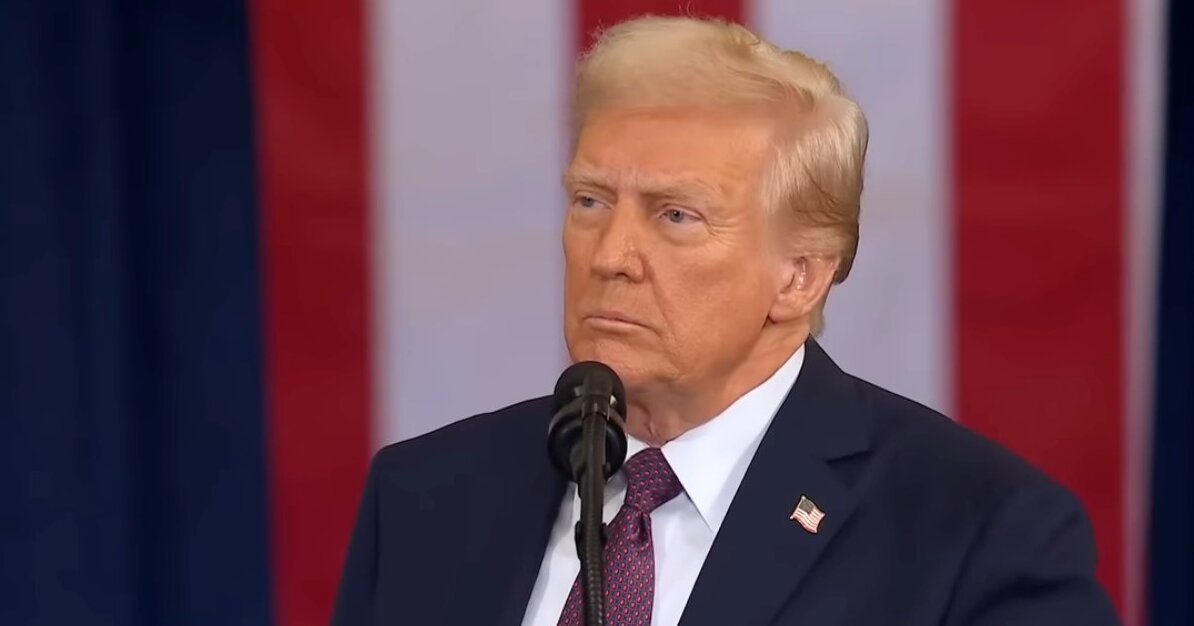
President Donald Trump’s 80th birthday has arrived at a politically sensitive moment, placing renewed attention on a subject that has followed recent American presidents with growing intensity: age, stamina and public confidence in presidential judgment.
Trump, born in Queens, New York, in 1946, is now the oldest person ever sworn in as president. His milestone birthday comes as the White House is trying to project strength and energy, including through a highly unusual UFC-themed celebration on the White House South Lawn tied to America’s 250th anniversary events.
For supporters, the spectacle fits Trump’s political brand: loud, combative and built for maximum attention. For critics, it has become another symbol of a presidency that often blurs entertainment, personal image and public office.
But beyond the birthday event, the larger issue is more serious. Trump is facing questions not only about policy decisions, but also about temperament, health transparency and whether any president near or past 80 can withstand the demands of the office without more public scrutiny.
TRENDING TODAY
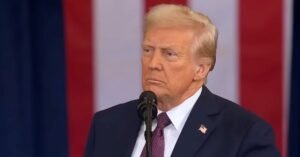

Those questions are not unique to Trump. Former President Joe Biden faced similar concerns during his time in office, especially after public appearances that raised doubts among voters about his stamina and communication. Democrats who avoided direct criticism of Biden’s age in 2024 now face accusations of a double standard when they raise similar concerns about Trump.
Still, Trump’s critics argue that the issue is not age alone. They say the concern is how age may be interacting with an already confrontational leadership style.
Trump’s speeches have long included digressions, repeated claims and sharp personal attacks. In his second term, critics say those traits appear more pronounced at a time when the country is dealing with major pressures, including the war with Iran, inflation concerns and a deeply divided political environment.
Recent polling has shown that many Americans are worried about Trump’s behavior and sharpness as he gets older. A Reuters/Ipsos survey earlier this year found that a majority of Americans believed Trump had become more erratic with age. That does not prove medical decline, and it should not be treated as a diagnosis. But it does show that the public debate around age and presidential fitness is no longer limited to one party.
The White House has rejected concerns about Trump’s stamina and mental sharpness, repeatedly presenting him as highly active, accessible and fully capable of handling the presidency. Trump himself has often pointed to cognitive tests and medical checkups as evidence that he remains fit for office.
However, transparency remains a key issue. When presidents provide limited or carefully managed health information, public suspicion often grows. That was true during debates over Biden’s condition, and it is now true again as critics question Trump’s schedule, public appearances and visible signs of aging.
The challenge for any White House is that voters do not judge presidential fitness only through official statements. They judge it through interviews, press conferences, travel schedules, late-night social media posts and moments captured on camera. In the modern media environment, even a brief clip can become part of a much larger political narrative.
Trump’s age also carries national security implications because the presidency gives one person extraordinary authority. The president must respond to global crises, military threats, economic shocks and domestic emergencies, often with limited time and incomplete information. That makes questions about judgment and impulse control especially important.
At the same time, age alone should not be used as a political weapon. Many people remain sharp, active and capable well into their 80s. Others experience decline earlier. The real question is not whether a president is old, but whether the public has enough reliable information to judge whether that president is physically and mentally prepared for the job.
That standard should apply to both parties.
The debate around Trump’s 80th birthday shows how American politics has entered a new era in which voters are increasingly uneasy about elderly leadership. Congress remains filled with aging lawmakers, and recent presidents have pushed the limits of age in the Oval Office. The public appears to be asking whether the country needs clearer expectations for health disclosure, transparency and accountability at the highest levels of government.
For Trump, the political problem is that his age is becoming harder to separate from broader questions about his leadership style. Supporters see energy and defiance. Critics see impulsiveness and decline. The White House sees an image battle. Voters see a president who will be asked to manage enormous power through the final years of his term.
As Trump marks 80, the question is not simply whether he can celebrate another political milestone. It is whether Americans can have confidence that the presidency is being exercised with discipline, stability and transparency.
Why It Matters
The age debate is no longer just a personal issue for presidents. It is now a major question of public trust, national security and democratic accountability. Voters have watched two consecutive presidencies face intense scrutiny over age, stamina and mental sharpness.
Trump’s 80th birthday gives the issue a sharper focus because his presidency is unfolding during a period of war, economic pressure and political instability. In that environment, concerns about judgment and transparency become more than campaign talking points.
What Comes Next
The White House is likely to continue presenting Trump as strong, active and in control, while critics will continue pointing to public appearances, polling and policy decisions as reasons for concern.
The issue may also become part of the 2026 midterm campaign, especially if Democrats frame Trump’s age and temperament as part of a broader argument about Republican leadership. Republicans, meanwhile, are likely to accuse Democrats of hypocrisy after years of defending Biden against similar concerns.
Either way, the age question is not going away. It is becoming a permanent part of how Americans evaluate presidential power.
Supporters marked Trump’s 80th birthday by portraying him as energetic and politically active, while critics argued the milestone raises broader questions about age, transparency and presidential judgment.
Happy 80th Birthday to President Donald J. Trump! 🎉
On Sunday, June 14, our greatest President turns 80 — and he’s defying age like a true dynamo. Up early, working late, and charging full speed with peace deals, America First wins, and making history.
Sen. Ted Cruz: “He has… pic.twitter.com/LuvJjLDlx1
— Paul A. Szypula 🇺🇸 (@Bubblebathgirl) June 13, 2026