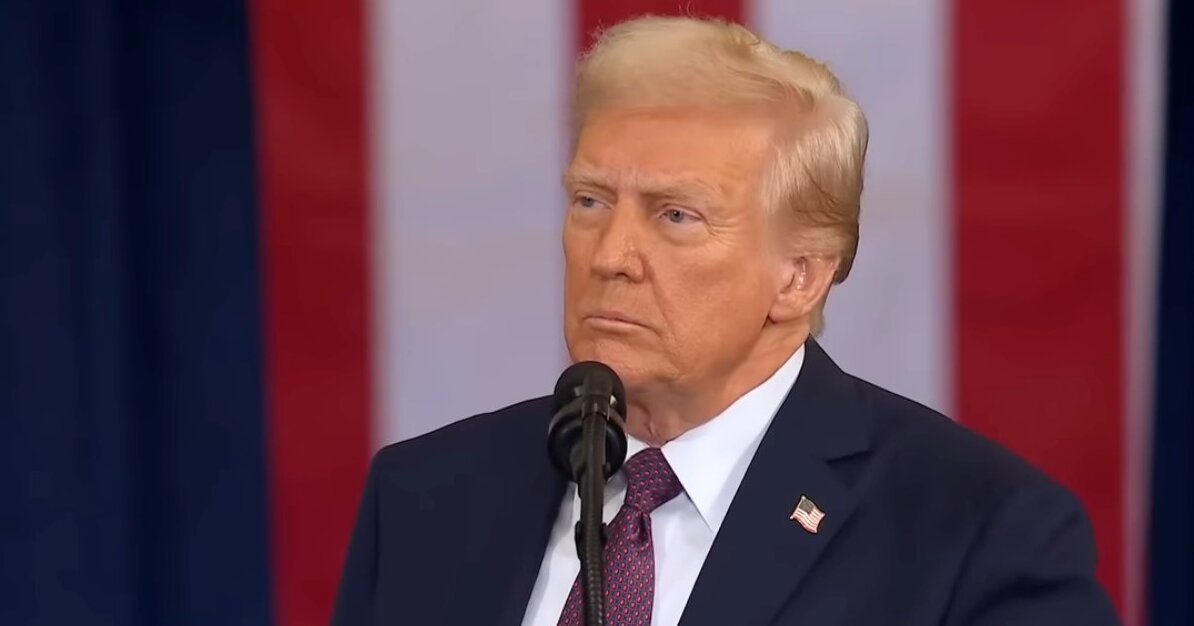
President Donald Trump triggered international attention after warning Oman not to support any arrangement that would give Iran influence over the Strait of Hormuz.
The comments came during a White House Cabinet meeting after Trump was asked about reports of a possible short-term arrangement involving Iran and Oman sharing authority over the critical shipping route.
Trump rejected the idea immediately.
He said the Strait of Hormuz must remain open to everyone and warned that no country should be allowed to control it.
TRENDING TODAY

“The strait’s gotta be open to everybody,” Trump said. “Nobody’s going to control it. We’ll watch over it.”
He then directed a sharp warning toward Oman, a longtime U.S. partner and quiet mediator between Washington and Tehran.
“Oman will behave just like everybody else or we’ll have to blow them up,” Trump said.
The remark quickly drew attention because Oman has been one of America’s most important diplomatic backchannels in the Middle East for decades.
Muscat has helped facilitate talks between the U.S. and Iran, including negotiations that helped lead to the 2015 Iran nuclear deal.
Oman also maintains a defense relationship with the United States dating back to 1980, and its Port of Duqm has served as an important facility for U.S. Navy logistics and maintenance.
The dispute centers on reports that Iran has pushed for a new arrangement in the Strait of Hormuz that could include tolls, fees or some form of joint management with Oman.
Iranian state media reported that a draft memorandum of understanding could give Iran and Oman shared authority over the waterway.
The White House dismissed that report as false.
The Trump administration has strongly opposed any agreement that would allow Iran to profit from or control access to the strait.
The Strait of Hormuz is one of the world’s most important energy corridors, with a major share of global oil and gas shipments passing through it.
Any disruption there can quickly affect energy prices, shipping routes and global markets.
The strait has become a central issue in U.S.-Iran negotiations after months of conflict and economic pressure.
Trump said Iran wants a deal but argued that Tehran has not yet offered enough to satisfy Washington.
He warned that if Iran does not provide what the U.S. is demanding, the military option remains available.
The United States is demanding that Iran abandon nuclear weapons development and relinquish its stockpile of highly enriched uranium.
Iran is seeking relief from the American naval pressure that has cut into its oil exports and economic activity.
Trump also accused Iran of stalling negotiations in hopes of waiting out the political calendar.
The president has claimed Iran’s military has been heavily damaged and that Tehran is negotiating from weakness.
However, some assessments suggest Iran has retained or rebuilt key military capabilities, including missile and launch infrastructure.
For Oman, the situation is delicate.
The country has long balanced ties with the United States and Iran, allowing it to serve as a trusted go-between during regional crises.
But Trump’s remarks show that Washington has little patience for any Omani role that appears to help Iran gain leverage over Hormuz.
The controversy highlights how the Iran conflict is now straining not only U.S. relations with adversaries, but also with quiet diplomatic partners that have traditionally helped keep channels open.
Why It Matters
The Strait of Hormuz is central to global energy security. Any plan involving tolls, joint control or Iranian influence over the waterway could affect oil markets and freedom of navigation. Trump’s warning also risks putting pressure on Oman, a longtime U.S. partner that often serves as a backchannel to Iran.
What Comes Next
U.S. negotiators are expected to keep pushing for a deal that reopens the strait without giving Iran control or revenue from shipping. Oman may continue trying to mediate, but Trump’s public warning could complicate its role as a neutral broker.