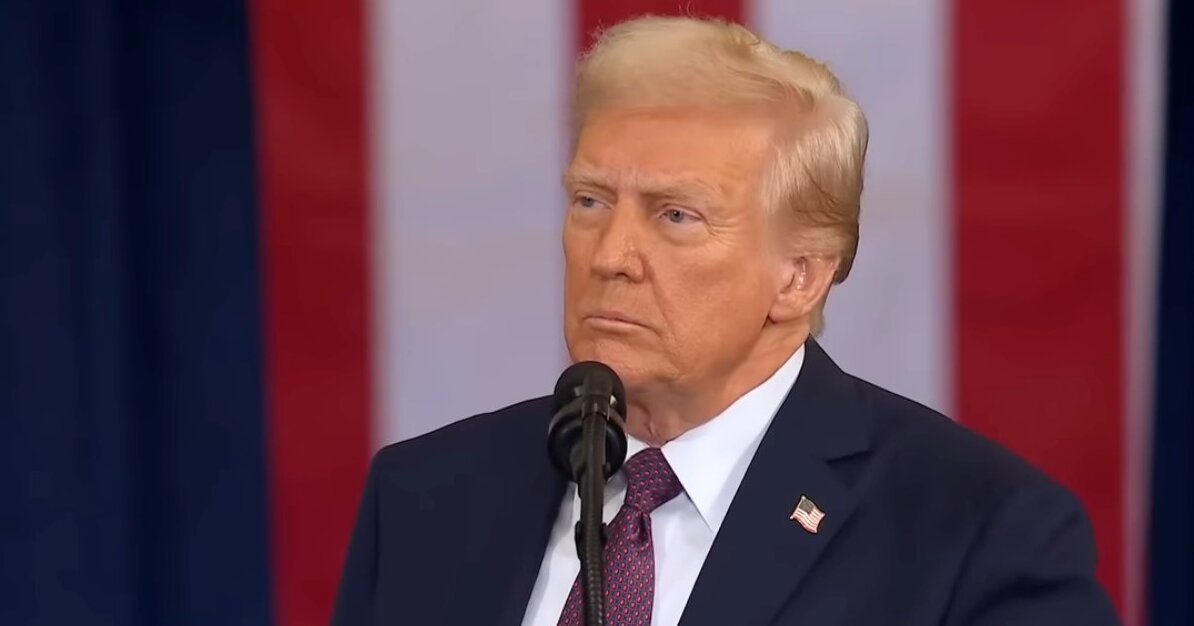
The U.S. Supreme Court has handed President Donald Trump a major victory in his push to expand executive authority, ruling that presidents have broad power to remove leaders of independent federal agencies.
In a 6-3 decision in Trump v. Slaughter, the court sided with Trump in a dispute over his firing of Federal Trade Commission Commissioner Rebecca Slaughter. The ruling overturns nearly 90 years of legal precedent that had limited a president’s ability to remove certain independent agency officials without cause.
The decision is likely to reshape how Washington’s regulatory agencies operate. Independent agencies such as the FTC were designed to have some insulation from direct political pressure, with commissioners serving fixed terms and usually removable only for specific reasons such as neglect of duty or misconduct. Supporters of that structure say it protects agencies from becoming tools of whichever party controls the White House.
The Supreme Court majority took a different view, concluding that the Constitution gives the president broader authority over executive branch officials. Supporters of the ruling argue that presidents should be able to remove officials who exercise executive power because voters hold the president accountable for how the government operates.
TRENDING TODAY

Trump celebrated the decision as a major win. His administration had argued that independent agencies should not be able to operate outside presidential control when they make important enforcement, regulatory and policy decisions.
Critics warned that the ruling could weaken agency independence and turn regulatory leadership into a loyalty test. Labor groups, consumer advocates and some legal scholars said the decision may allow presidents to replace experts and commissioners with political allies, making agencies less stable and more partisan.
The case began after Trump fired Slaughter and another Democratic FTC commissioner. The administration did not cite traditional misconduct grounds, instead saying their continued service was inconsistent with Trump’s priorities. Slaughter challenged the firing, arguing that federal law protected FTC commissioners from removal without cause.
For decades, that argument had support from a 1935 Supreme Court decision known as Humphrey’s Executor. In that case, the court limited President Franklin Roosevelt’s power to remove an FTC commissioner and helped establish the modern legal foundation for independent agencies. The new ruling breaks sharply from that framework.
The impact could extend beyond the FTC. Agencies such as the National Labor Relations Board, Federal Labor Relations Authority and other boards that handle labor, consumer, competition or workplace issues may now face greater White House control. That could affect workers, unions, employers, consumers and businesses that rely on consistent enforcement rules.
At the same time, the court drew a line around the Federal Reserve. In a separate decision, the justices rejected Trump’s effort to fire Federal Reserve Governor Lisa Cook, preserving a stronger form of independence for the central bank. The court’s treatment of the Fed suggests that monetary policy may remain protected from the same level of presidential removal power, at least for now.
That distinction matters for the economy. The Federal Reserve sets interest rates and plays a major role in inflation, employment and financial stability. Markets generally value Fed independence because investors worry that direct presidential control could politicize rate decisions.
Justice Sonia Sotomayor, writing in dissent in the agency case, warned that the majority had discarded long-settled constitutional law and handed the president far greater power than before. She and the other liberal justices argued that Congress should be able to create independent agencies when it believes certain functions require protection from direct political pressure.
The ruling now raises practical questions. If agency leaders can be fired more easily, future presidents from either party may move quickly to reshape boards and commissions after taking office. That could make federal regulation more responsive to election results, but also less predictable for businesses and the public.
For ordinary Americans, the decision could affect more than Washington procedure. Independent agencies influence consumer fraud enforcement, workplace rights, union elections, competition policy, financial regulation and safety rules. If their leadership changes more often based on presidential priorities, policy could swing more sharply from one administration to the next.
Some details remain unclear, including exactly which agencies will be treated like the FTC and which may receive special protection similar to the Federal Reserve. More litigation is likely as dismissed officials, agencies and regulated industries test the boundaries of the ruling.
Why It Matters
The decision strengthens presidential control over parts of the federal government that were once considered more independent. It could affect labor rights, consumer protection, business regulation, competition enforcement and the balance of power between Congress and the White House.
What Comes Next
The Trump administration may move to replace more agency leaders with officials aligned with its agenda. Legal challenges are likely over how far the ruling applies, especially to agencies with different structures or roles. Congress may also face pressure to reconsider how independent agencies are designed.
Trump celebrated the Supreme Court’s Slaughter decision as a major expansion of presidential power over independent agency leaders.
Today’s Historic Slaughter Decision by the Supreme Court is the Greatest Increase in Presidential Power in the last 100 years. Such a Monumental Ruling at such an important time! President DONALD J. TRUMP
( TS: Jun 29 2026, 2:40 PM ET )… pic.twitter.com/NR3aSUUB1j
— Commentary Donald J. Trump Truth Social Posts On X (@TrumpTruthOnX) June 29, 2026