

A new monument in Montgomery, Alabama, is turning one of the most painful symbols from Rosa Parks’ arrest into a public reminder of the civil rights movement and the ongoing fight over American memory.
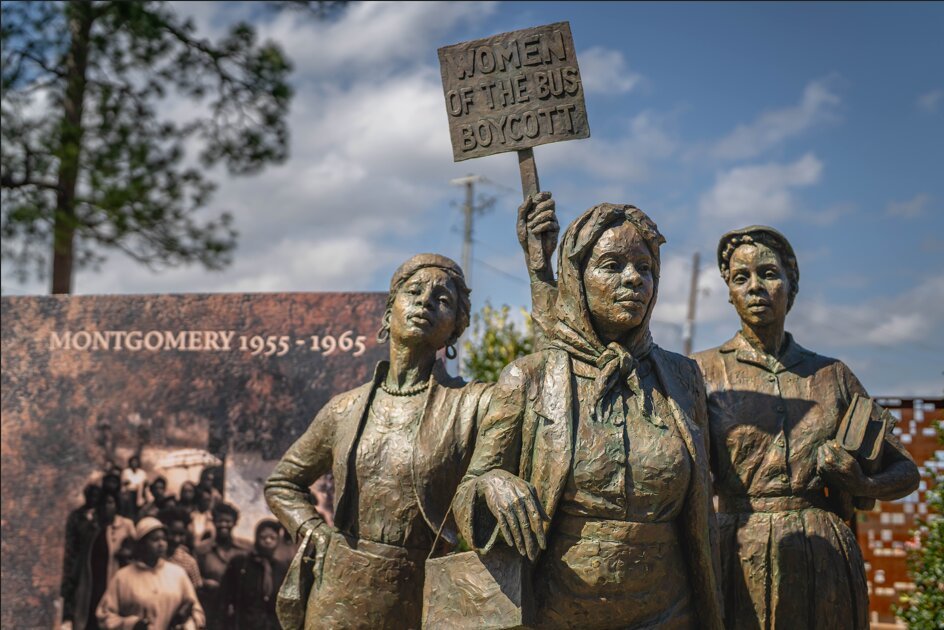
At Montgomery Square, bronze hands rise from the pavement holding a placard marked “7053” — the booking number shown in Parks’ 1956 mugshot after she and other leaders of the Montgomery bus boycott were arrested.
The number once identified Parks as a criminal suspect. Now, it has been transformed into a monument honoring resistance, sacrifice and the long struggle against racial injustice.
The square is the newest Legacy Site created by the Equal Justice Initiative, the organization founded by attorney Bryan Stevenson. EJI has built several major historical sites in Montgomery, including the Legacy Museum, the National Memorial for Peace and Justice and the Freedom Monument Sculpture Park.
TRENDING TODAY


Stevenson said Montgomery Square was created because many Americans still do not fully understand what happened during the civil rights era. The site sits along Montgomery Street, where voting rights marchers passed in 1965. Its exterior wall includes a large inscription: “We have come too far to turn around now.”
The message has taken on new weight after recent legal and political fights over voting rights. The conservative-majority Supreme Court recently weakened protections under Section 2 of the Voting Rights Act, a key part of the landmark law that banned racial discrimination in voting. The ruling has sparked criticism from civil rights advocates, who warn that it could lead to new efforts to dilute Black political representation.
Montgomery Square is designed not only to preserve history, but also to challenge visitors to think about what that history demands today.
Stevenson has long argued that the United States has not created enough public spaces that honestly confront racial terror, segregation and the legacy of slavery. He has compared that absence to countries such as Germany and South Africa, where public memorials force people to face painful national histories.
The new square also pushes back against a simplified version of the civil rights movement. Parks’ refusal to give up her bus seat is often remembered as a single heroic moment. But the Montgomery bus boycott was a collective campaign that lasted more than a year and required major sacrifice from cooks, maids, laborers, teachers, students, ministers and ordinary families.
Many Black residents walked long distances, lost income, faced threats and endured retaliation. The movement was inspiring, but it was also costly and dangerous.
For families connected to the history of racial violence, EJI’s sites carry personal meaning. The National Memorial for Peace and Justice honors more than 4,400 victims of lynching and racial terror, while the Legacy Museum traces the history from slavery to mass incarceration.
The new Rosa Parks monument adds another layer to that memory. It shows how a booking number meant to strip away dignity can be reclaimed as a symbol of courage.
The debate over how America remembers its past remains deeply political. Some states have moved to restrict how schools teach race and history, while civil rights advocates argue that avoiding painful facts only allows old injustices to continue in new forms.
Montgomery Square answers that debate with a simple message: memory is not just about the past. It is also about the choices Americans make now.
Why It Matters
The monument matters because it turns a symbol of criminalization into a symbol of resistance. Rosa Parks’ booking number once reduced her to an arrest record, but the new memorial restores the larger meaning of her act and the movement around it.
It also matters because voting rights and civil rights history are again at the center of national debate. The site reminds visitors that many rights Americans take for granted were won through organizing, risk and sacrifice.
What Comes Next
Montgomery Square is expected to become another major stop among EJI’s Legacy Sites, drawing visitors who want to understand the deeper history of the civil rights movement.
The broader debate will continue over how schools, museums and public institutions teach racial history, especially as voting rights and representation remain politically contested.
The monument references Rosa Parks’ 1956 booking number, shown in her Montgomery bus boycott mugshot.
And the Montgomery Bus Boycott mugshot of Rosa Parks from February 22, 1956. https://t.co/f3bRLDU6YY pic.twitter.com/bUuoRSELng
— The ’60s at 60 (@the_60s_at_60) June 19, 2026





