

Firefighters in Los Angeles are continuing to battle a stubborn warehouse fire in Boyle Heights that has burned for days, sent smoke across parts of the city and prompted emergency declarations from both local and state officials.
California Gov. Gavin Newsom declared a state of emergency for Los Angeles County, directing state agencies to provide additional help as crews work to fully extinguish the fire. Mayor Karen Bass had already issued a local emergency declaration to secure more resources and support for affected residents.
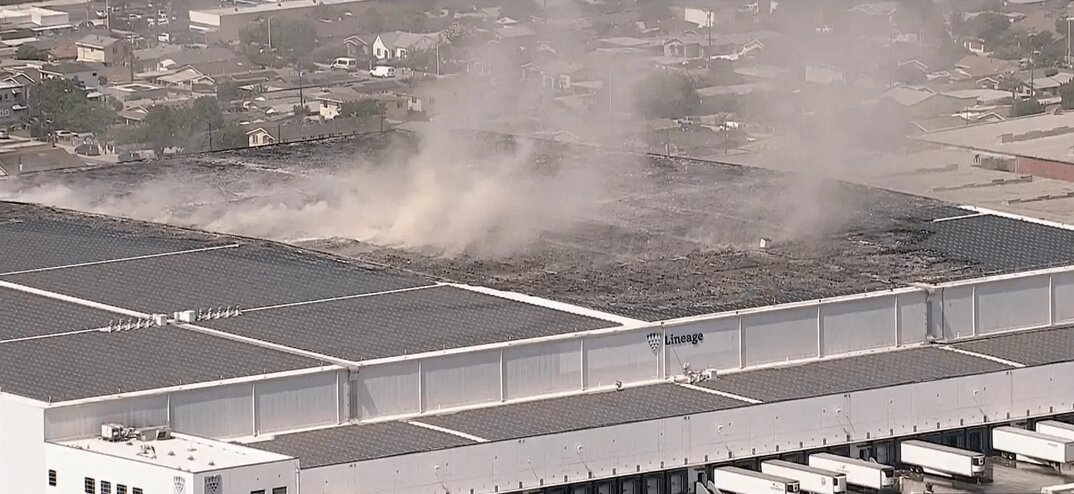
The fire began Wednesday at a massive cold-storage facility in Boyle Heights. Crews initially knocked down visible flames on the roof, but the incident has remained active because of dangerous conditions inside the building. Fire officials say smoke, poor visibility, lingering hot spots, unstable roof conditions and hazardous-material concerns have made it difficult for firefighters to enter parts of the structure.
The Los Angeles Fire Department said crews had confined the fire to one side of the large building, but officials have warned that smoke may continue as materials inside smolder. No injuries have been reported, and the cause remains under investigation.
TRENDING TODAY


Residents in Boyle Heights and nearby neighborhoods have raised concerns about the persistent smoke. Some have reported chemical-like smells, while others with health conditions have chosen to leave the area temporarily. Officials previously issued shelter-in-place orders because of smoke and possible ammonia exposure, though those orders were later lifted.
An ammonia line ruptured during the early firefighting response, adding to the danger. Ammonia is commonly used as a refrigerant in cold-storage facilities, but it can be hazardous if released. Fire officials have said the most serious hazardous-material concerns have been addressed, but crews are still dealing with fire and biohazard challenges.
The building reportedly contains about 85 million pounds of frozen food, including meat and other products that may now be rotting because of the fire and loss of refrigeration. Once the fire is out, officials will have to plan for the safe removal and disposal of spoiled food, creating a major cleanup challenge.
Smoke from the fire has also affected the wider area. Haze was visible over parts of Los Angeles, including near Dodger Stadium, where some observers raised concerns about air quality during events. Community organizations have been distributing masks, and the state has made millions of N95 respirators available, along with air purifiers, bottled water and other emergency supplies.
Local leaders say the fire has disrupted daily life in Boyle Heights for several days. Councilmember Ysabel Jurado said residents have had to deal with smoke, health questions and uncertainty about when the incident will fully end.
The fire has also highlighted the complexity of large industrial and cold-storage fires. Facilities like this can contain insulation foam, refrigeration systems, solar panels, batteries and large amounts of stored goods, all of which can make firefighting more difficult than a typical structure fire.
For now, firefighters are continuing to work from safe positions while monitoring the building’s stability and air quality. Officials say public health and firefighter safety remain the top priorities.
Why It Matters
The Boyle Heights fire matters because it has become more than a warehouse blaze. It is now a public-health and cleanup emergency involving smoke, ammonia concerns, unstable conditions and millions of pounds of spoiled food in a dense Los Angeles neighborhood.
What Comes Next
Crews will continue working to fully extinguish hot spots while officials monitor air quality and prepare for a difficult cleanup. Once the building is safe enough to access, authorities will have to remove spoiled food and investigate what caused the fire.





