Iran’s threat to the United States is often discussed as something happening far from home — in the Middle East, the Red Sea, the Strait of Hormuz, Iraq, Syria, Lebanon or Yemen.
But security experts warn that Tehran’s proxy network has expanded far beyond the region, using criminal corridors, illicit finance, migration routes and foreign influence networks to extend its reach closer to the U.S. homeland.
The concern is not only Iran’s missile or nuclear capability. It is the way Tehran has built a long-running asymmetric warfare system that operates below the level of conventional war.
Instead of relying only on direct military confrontation, Iran has used proxies, terrorism, cyber activity, smuggling networks, ideological movements and financial systems to pressure the United States and its allies while maintaining distance from the violence.
TRENDING TODAY


A recent federal case involving Mohammad Baqer Saad Dawood Al-Saadi has renewed attention to that threat model.
U.S. prosecutors charged Al-Saadi, described as a senior commander in Kata’ib Hizballah, an Iranian-backed Iraqi militia linked to the Islamic Revolutionary Guard Corps, with helping direct plots against Jewish, Israeli and American targets in Europe and North America.
The case reportedly included an alleged plot involving a Manhattan synagogue.
Analysts say the most important part of the case is not only the alleged targets, but the method. Prosecutors said the operation relied on layers of deniability, front groups and criminal facilitators — tactics long associated with Iranian proxy activity.
According to the allegations, Al-Saadi sought to use cartel-linked smuggling networks and facilitators in the Western Hemisphere. That detail has intensified concern that Iranian-backed groups may be exploiting the same corridors used by cartels and transnational criminal organizations.
Iran has used similar methods before.
In Latin America, Hezbollah-linked networks have long been connected to smuggling, fundraising, money laundering and illicit finance. The Tri-Border Area of Argentina, Brazil and Paraguay has repeatedly been identified by security officials as a hub where criminal networks and extremist financing can overlap.
The 1992 Israeli Embassy bombing in Buenos Aires and the 1994 AMIA Jewish community center bombing remain two of the most significant examples of Iranian and Hezbollah-linked activity in the Western Hemisphere.
Those attacks showed how Tehran could use proxies, local infrastructure, diaspora networks, front organizations and criminal channels to operate far from the Middle East.
Today, security officials worry that the same model is adapting to modern conditions.
Cartel routes, corrupt logistics systems, fake documents, weak border controls, illicit finance and migration pipelines can all be exploited by hostile actors. Not every criminal network is tied to Iran, but adversaries can use existing smuggling routes for their own purposes.
That creates a major challenge for U.S. security policy.
America often separates threats into categories: terrorism, crime, immigration, cyberattacks, foreign influence or military conflict. Iran’s proxy model does not work that way. It blends those categories together.
That is why some analysts argue the southern border is no longer only an immigration or law enforcement issue. It is also a homeland security and national defense concern.
Iran’s broader strategy is designed to create pressure without triggering a full-scale war. The Houthis can threaten Red Sea shipping. Militias can attack U.S. forces in Iraq or Syria. Hezbollah-linked networks can move money through Latin America. Criminal groups can exploit smuggling routes. Cyber actors can target critical infrastructure.
Each piece may appear separate, but together they form a networked pressure campaign.
The Al-Saadi case is a warning that America’s adversaries may increasingly use criminal infrastructure to reach Western targets while avoiding direct attribution.
Supporters of a tougher policy toward Iran argue the U.S. must treat these networks as part of one larger strategic threat, not as disconnected criminal or regional problems.
Critics warn that policymakers must still avoid overgeneralizing, because not every cartel route or migrant flow is connected to terrorism or Iran.
The key challenge is separating legitimate security concerns from political exaggeration while still recognizing that hostile states can exploit gaps in open societies.
Why It Matters
Iran’s proxy strategy is not limited to the Middle East. If Iranian-backed groups can use criminal networks, smuggling corridors or financial systems in the Western Hemisphere, the threat becomes a direct U.S. homeland security issue.
What Comes Next
U.S. officials are likely to face growing pressure to investigate the overlap between cartels, foreign terror groups, illicit finance and border security. The Al-Saadi case could become a major example in future congressional debates over Iran, immigration, terrorism and homeland defense.
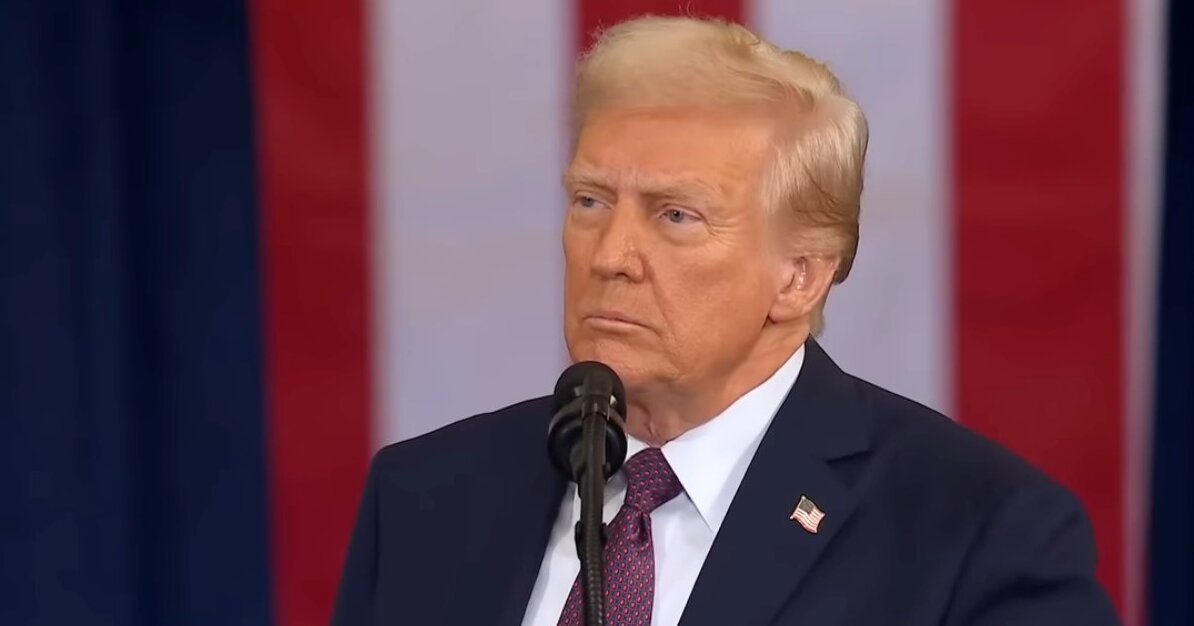
Trump said final details of a potential Iran agreement were still being discussed and would be announced shortly.
Trump on Iran negotiations: “Final aspects and details of the Deal are currently being discussed, and will be announced shortly.” pic.twitter.com/o0c3E4MkmY
— TheBlaze (@theblaze) May 23, 2026