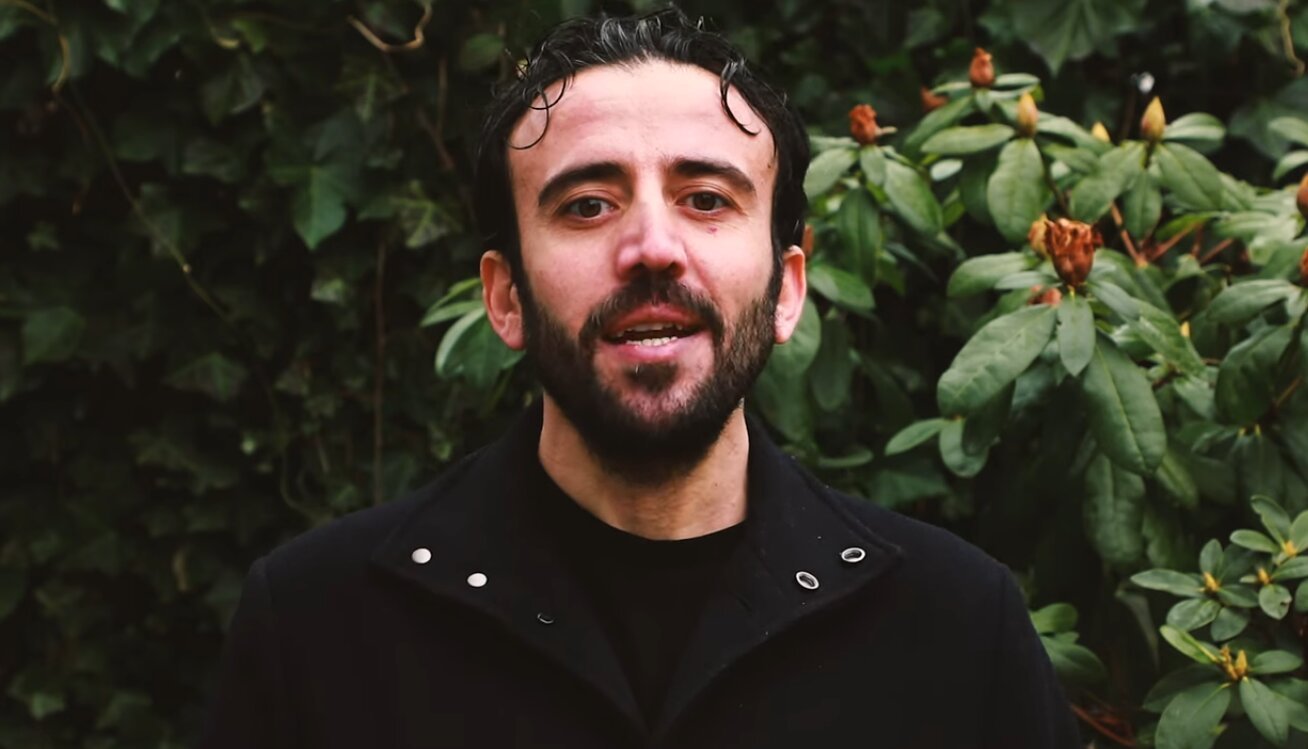
A Howard University professor is facing criticism after publishing an opinion essay that sharply criticized the father of Austin Metcalf, the Texas teenager killed by Karmelo Anthony during a high school track meet confrontation.
Dr. Stacey Patton, a professor at Howard University’s School of Communications, published the Substack essay after Anthony was sentenced to 35 years in prison for the fatal stabbing of Metcalf. The case has drawn national attention because of the ages of the teenagers involved, the violent nature of the incident, the rejected self-defense argument, and the racial debate that has surrounded the trial.
In the essay, Patton addressed Jeff Metcalf, Austin’s father, and argued that the tragedy should not be understood only through the moment Anthony used a knife. She framed the case through questions of race, boundaries, parenting and how Black boys are perceived in American society.
Her language drew immediate backlash. Critics accused Patton of blaming the victim’s family and shifting responsibility away from Anthony, who was convicted by a jury and sentenced by the court. Supporters of Patton’s broader argument said she was raising questions about race, fear, youth behavior and how public narratives are formed after violent confrontations.
TRENDING TODAY


The essay was published after Jeff Metcalf delivered a victim-impact statement in court. According to reports, he said Anthony had failed his parents, himself and society. Patton responded by arguing that Jeff Metcalf’s words reflected a broader social view about who belongs in a community and who is treated as a threat.
Patton later defended the piece in a statement to Fox News Digital, saying it was meant as a critique of racial power and not as an attempt to excuse violence or attack a grieving father. She said her central argument was that Black children should not be stripped of their humanity because of a verdict or public outrage.
The controversy comes at a time when the Anthony-Metcalf case remains deeply divisive online. Anthony, who is Black, was convicted in the killing of Metcalf, who was white, after a confrontation at a Frisco, Texas, track meet in April 2025. Prosecutors said Anthony stabbed Metcalf in the heart. Anthony’s defense argued self-defense, but the jury rejected that argument and convicted him.
The court sentenced Anthony to 35 years in prison. The judge has defended the trial process, while Anthony’s legal team has filed an appeal.
The case has become more than a local criminal trial. It has turned into a national argument about race, criminal justice, victimhood, self-defense, social media activism and how high-profile cases are discussed after a verdict.
Some public figures have questioned whether race affected the prosecution, trial or sentencing. Others have argued that the focus should remain on the fact that Metcalf was killed and that a jury found Anthony guilty. The emotional reaction from both sides has intensified since the sentence was announced.
Patton’s essay added another layer to that debate. By addressing the victim’s father directly and accusing him of failing to teach his son about boundaries, she moved the conversation from legal responsibility to cultural responsibility. That approach was strongly criticized by those who believe it unfairly targeted a grieving parent whose son was killed.
Critics also objected to the timing of the essay, which came shortly after sentencing. They argued that a victim’s family should be allowed to grieve and speak in court without being accused of contributing to the tragedy. Some conservative commentators and social media accounts framed Patton’s essay as an example of how racial politics can be used to minimize violent crime.
Patton’s defenders may argue that the public has often examined the behavior of Black victims in racially charged cases and that similar scrutiny is rarely applied to white victims. Patton’s own writing appears to place the Metcalf case within that broader historical argument.
But the central legal fact remains unchanged: Anthony was convicted of murder and sentenced to prison. Any debate about race, culture or public reaction does not erase the verdict or the loss suffered by Metcalf’s family.
Howard University had not immediately issued a widely reported public response to the controversy. Fox News Digital said it had reached out to the university and Metcalf’s family for comment.
The backlash also raises broader questions for universities and public intellectuals. Professors often write opinion pieces on controversial social issues, but when those essays involve grieving families and violent crimes, the response can be intense. The line between social critique and personal attack becomes especially contested.
For the Metcalf family, the essay may feel like another painful chapter in a case already marked by national attention and online commentary. For Anthony’s supporters, the essay may reflect a belief that the case has been discussed without enough attention to race and fear. For the wider public, it is another sign that the trial has become a cultural flashpoint far beyond the courtroom.
As Anthony’s appeal moves forward, the public debate is likely to continue. But the controversy over Patton’s essay shows that even after sentencing, the case remains politically and emotionally charged.
Why It Matters
This matters because the Karmelo Anthony case has become a national flashpoint over crime, race, self-defense and public grief. Patton’s essay intensified that debate by directly criticizing the father of the victim after sentencing.
It also matters because high-profile criminal cases increasingly become social media battles after the verdict. Commentary around victims, defendants and families can shape public perception long after a jury has reached a decision.
What Comes Next
Anthony’s appeal is expected to continue through the courts. Meanwhile, Howard University may face pressure to respond to Patton’s essay if the backlash grows.
The Metcalf family and Anthony’s supporters are also likely to remain at the center of public debate as commentators continue arguing over race, justice and responsibility in the case.
The essay drew sharp criticism online, with some commentators accusing Patton of shifting blame away from Anthony and toward the victim’s family.
Karmelo Anthony’s supporters are now threatening to riot and burn down cities after he was found guilty.
Riots for what?
Do y’all think it’s okay for a Black person to kill a white person with no consequences?
That is racist.
Somebody lost their son. Somebody lost their… pic.twitter.com/0tuB2aefPw
— Terrence K. Williams (@w_terrence) June 11, 2026