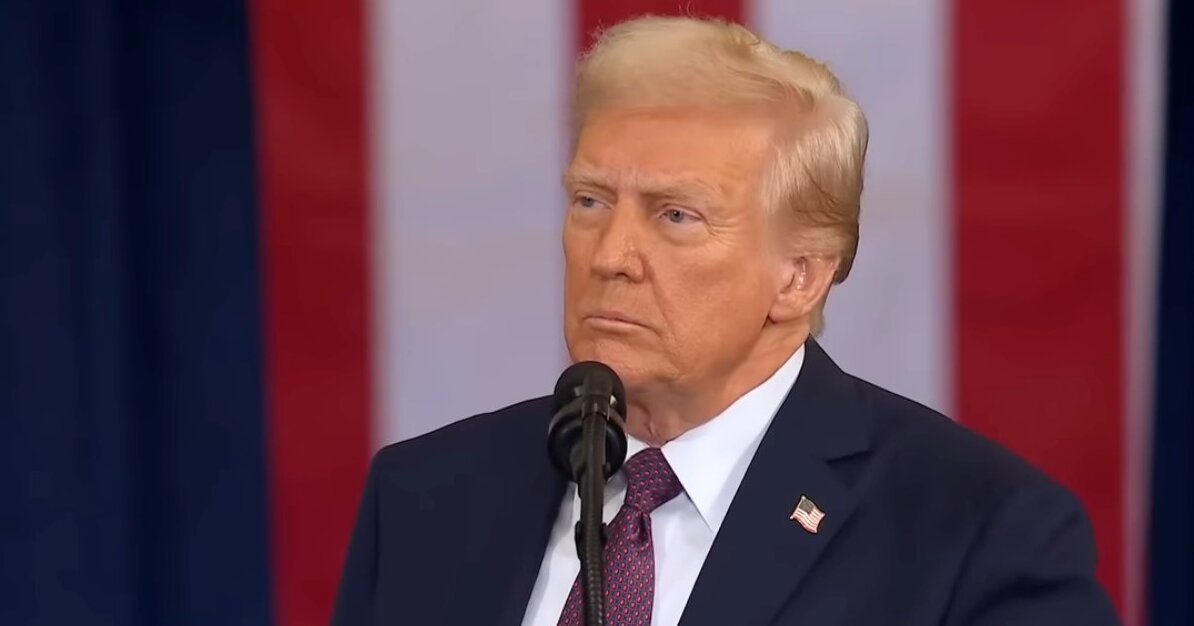
A federal judge in Boston has blocked key parts of President Donald Trump’s executive order aimed at tightening rules around mail-in voting, delivering a major setback to the administration’s push to reshape election procedures before the midterm elections.
U.S. District Judge Indira Talwani ruled that the administration could not move forward with provisions requiring new federal involvement in state voter-roll systems and mail ballot procedures. The ruling paused parts of Trump’s March 31 executive order that sought to use federal agencies, including the U.S. Postal Service and immigration-related databases, to verify voter eligibility and regulate the handling of mail-in ballots.
The order would have required states to provide voter information to a new federal ballot-mail system and would have directed the Postal Service to use barcode tracking and verification rules tied to voter data. Under the proposed system, ballot envelopes that did not meet new federal serialization requirements or did not match submitted voter lists could be rejected and returned.
Talwani found that the president exceeded his constitutional authority by trying to impose federal election administration rules that belong primarily to states and Congress. Her injunction blocks the federal government from creating a new program to oversee state voter-roll maintenance or using investigations and prosecutions to pressure state and local officials involved in election administration.
TRENDING TODAY

The ruling does not prevent federal agencies from assisting states with voter eligibility or citizenship checks if states request that help and if the assistance follows the framework set by Congress. That distinction leaves room for voluntary cooperation while rejecting what the court viewed as a mandatory federal system imposed by executive order.
The case was brought by voting-rights groups, 23 states and the District of Columbia, who argued that the executive order threatened to disrupt election systems, confuse voters and exceed the president’s legal power. They said the Constitution gives states the primary role in running elections, while Congress has authority to set certain national rules. The president, they argued, cannot unilaterally rewrite those rules through an executive order.
The Trump administration has defended the order as an election-integrity measure. Officials argue that stricter verification, better ballot tracking and stronger citizenship checks are necessary to maintain public confidence in elections. The White House has also supported broader legislation that would impose new voter ID requirements and limit mail-in voting rules nationwide.
Supporters of the administration’s approach say mail-in voting systems need stronger safeguards, especially in states where large numbers of ballots are sent and returned through the postal system. They argue that barcode tracking and voter-list verification could reduce errors, improve transparency and help prevent improper ballots from being counted.
Critics see the proposal very differently. They warn that new federal requirements shortly before a midterm election could create confusion, delay ballot delivery and risk disenfranchising eligible voters. Voting-rights advocates also say the Postal Service is not designed to serve as a voter eligibility enforcement agency, and that requiring states to submit detailed voter data into a federal system could raise privacy and accuracy concerns.
For ordinary voters, the practical impact of the ruling is significant. Mail-in voting is used by millions of Americans, including seniors, people with disabilities, military families, rural voters, students and workers who cannot easily vote in person on Election Day. Any sudden change in how ballots are mailed, verified or returned could affect whether voters receive ballots on time or have them counted properly.
The case also raises a broader constitutional question: how much control can a president exert over election procedures without Congress? Talwani’s ruling suggests that election administration cannot be redesigned by executive order, especially when the changes would require states and local officials to submit to a new federal verification system.
The decision comes as election rules are becoming a central political issue ahead of the midterms. Trump and his allies have continued pushing for stricter national voting standards, while Democrats and voting-rights groups argue those efforts are aimed at restricting access to the ballot.
The ruling does not end the fight. The Trump administration may appeal, and Congress could still debate legislation related to voter ID, mail ballots and citizenship verification. But for now, the court’s decision blocks the most immediate effort to use federal agencies to impose new mail-in ballot rules on states that objected.
Why It Matters
The ruling matters because it protects states from being forced into a new federal ballot-mail and voter-roll system created by executive order. It also preserves existing mail-in voting procedures in the states that challenged the policy while litigation continues.
For voters, the decision reduces the risk of sudden rule changes before the midterms. For election officials, it reinforces the idea that major election changes must come through Congress or state law, not unilateral presidential action.
What Comes Next
The Trump administration may appeal the ruling, while voting-rights groups and state officials are expected to continue challenging the executive order in court.
At the same time, the political fight over mail-in voting is likely to continue in Congress and on the campaign trail. Trump is expected to keep pushing for stricter national voting rules, while opponents will argue that election access and state control must be protected ahead of the midterms.
A federal judge blocked parts of Trump’s executive order that sought to impose new limits on mail-in voting.
JUST IN: 🇺🇸 A Federal judge has blocked President Trump’s order imposing new limits on mail voting. pic.twitter.com/Wk8rC1tYs9
— Coinvo (@Coinvo) June 25, 2026