The United States should work closely with trusted allies and partners to develop stronger and more reliable supply chains outside of China.
Concerns about America’s economic dependence on China are once again drawing attention as lawmakers, analysts and national security experts continue warning about the growing influence of the Chinese Communist Party across global industries and supply chains.
Critics argue that many Americans still underestimate the level of control the Chinese government maintains over major sectors of society, including technology, manufacturing, communications and even aspects of everyday life inside China itself.
“The CCP controls many of the most personal aspects of life in China, and most Americans do not fully understand the scale of that control,” one policy analyst recently stated during a discussion on U.S.-China relations.
TRENDING TODAY


In recent years, tensions between Washington and Beijing have expanded far beyond traditional trade disputes. The rivalry now includes artificial intelligence, semiconductor production, cybersecurity, pharmaceuticals, energy infrastructure and critical mineral supply chains.
National security officials have increasingly warned that the United States remains too dependent on Chinese manufacturing and production in several strategically important sectors. The COVID-19 pandemic exposed many of those vulnerabilities, particularly involving medical supplies, pharmaceuticals and industrial manufacturing.
Experts say the situation has pushed both Republican and Democratic leaders to rethink America’s long-term economic relationship with China.
Many policymakers now support efforts to relocate portions of critical supply chains away from China and toward allied nations viewed as more stable and politically reliable.
“We need to work closely with trusted allies and strategic partners to create stronger and more resilient supply chains outside of China,” one foreign policy expert explained. “That’s becoming both an economic and national security priority.”
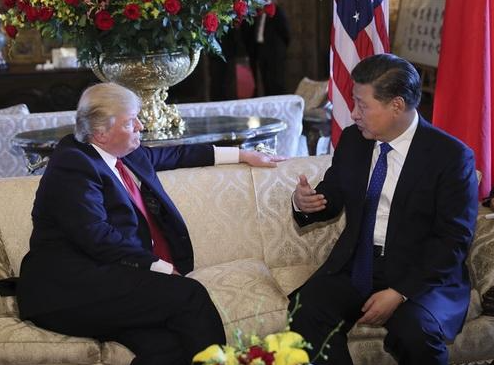
Countries such as India, Vietnam, Mexico, South Korea and Japan have increasingly been discussed as alternative manufacturing hubs for American and Western companies seeking to reduce exposure to Chinese markets.
Large corporations have already begun shifting portions of their operations outside China in response to rising geopolitical tensions, tariffs and concerns about future restrictions involving trade and technology.
At the same time, China remains deeply integrated into the global economy, making any rapid separation extremely difficult. American companies still rely heavily on Chinese factories, consumers and supply networks, particularly in industries involving electronics, batteries, pharmaceuticals and rare earth minerals.
Business leaders have warned that completely disconnecting from China would likely create major economic disruptions and increase costs for consumers worldwide.
Still, supporters of diversification argue that reducing dependence does not necessarily mean ending all trade relations with Beijing. Instead, they believe the goal should be creating more balanced and secure international supply chains capable of functioning during periods of political instability or conflict.
The issue has become even more urgent amid growing tensions surrounding Taiwan, which plays a critical role in global semiconductor production. Analysts warn that any military conflict involving Taiwan could severely disrupt the global technology industry and supply chains tied to advanced computer chips.
Concerns have also increased over China’s expanding influence in artificial intelligence, surveillance technology and global infrastructure projects tied to the Belt and Road Initiative.
Some U.S. officials argue the Chinese government uses economic relationships strategically to increase political leverage around the world.
Meanwhile, Chinese officials have repeatedly rejected accusations that Beijing seeks unfair dominance over global markets or foreign industries. Chinese leaders continue arguing that economic cooperation benefits both nations and helps maintain global stability.
Despite ongoing disagreements, trade between the United States and China remains massive, with both countries still heavily interconnected economically.
However, Washington has steadily increased restrictions involving advanced semiconductor exports, artificial intelligence technology and Chinese-owned companies viewed as potential national security risks.
The debate over China’s role in the global economy is expected to remain one of the defining geopolitical issues of the coming decade.
For many American officials and analysts, the challenge is no longer simply about trade deficits or tariffs. Instead, they believe the larger issue involves balancing economic cooperation with national security, technological leadership and long-term strategic independence.
As global competition between the United States and China continues intensifying, policymakers from both parties increasingly agree on one point: America’s future supply chains will likely need to become far less dependent on Beijing.