Downtown Los Angeles is facing renewed questions about its post-pandemic recovery after a new global survey ranked the city center among the least vibrant downtowns of major cities studied worldwide.
The findings come from Gensler’s 2026 City Pulse report, which surveyed roughly 35,000 residents across 75 cities and 30 countries about how they experience their downtown areas. The report focused on what makes people visit, spend time and feel connected to urban centers.
Los Angeles ranked near the lower end of the survey for downtown vibrancy. According to reporting on the study, about 65% of Los Angeles respondents described downtown as vibrant, placing the city behind major global and U.S. competitors such as New York, Chicago, Sydney and Shanghai, where scores were above 80%.
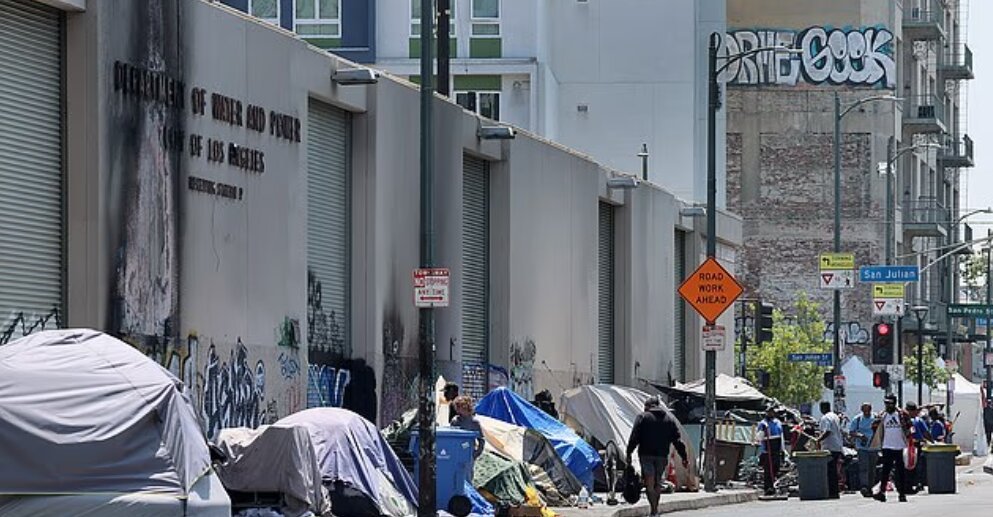
The ranking adds to a broader debate over the future of Downtown Los Angeles, which has struggled to regain momentum after the pandemic changed commuting patterns, office demand and retail foot traffic. Like many large American city centers, downtown L.A. has faced pressure from remote work, business relocations, public safety concerns, homelessness and high commercial vacancy rates.
TRENDING TODAY


Urban planners and business leaders have long argued that downtown Los Angeles has many of the ingredients needed for a stronger recovery. The district includes government buildings, financial offices, sports venues, museums, restaurants, entertainment destinations and major transit connections. On paper, those assets should support a busy urban core.
But the Gensler findings suggest that having amenities is not enough. A successful downtown must also feel active, safe, walkable and worth spending time in beyond a single appointment, work shift or event.
That challenge has become more visible in downtown Los Angeles as office vacancy has increased and some retail corridors have lost regular foot traffic. Empty storefronts and underused office buildings have contributed to a perception that parts of the district remain far from their pre-pandemic energy.
Gensler’s research argues that the strength of a downtown is not measured only by whether people visit. It also depends on how long they stay and whether they choose to return for recreation, shopping, dining or cultural life. In other words, a downtown that people pass through is not the same as a downtown where people want to spend time.
That is a key issue for Los Angeles. The city’s downtown has historically competed with many other regional centers, including Hollywood, Santa Monica, Pasadena, Culver City and the Westside. Unlike cities with a single dominant central business district, Los Angeles is spread out, making it harder for downtown to serve as the city’s main social and commercial hub.
Still, the new survey’s low ranking is likely to increase pressure on city leaders, developers and business groups to address the district’s weaknesses. Those include office vacancies, uneven street activity, concerns about crime, visible homelessness and the need for more housing and neighborhood-serving retail.
Public safety remains one of the most sensitive issues in downtown Los Angeles. Some business owners and residents have pointed to theft, vandalism and assaults as reasons people avoid the area. Law enforcement officials have said some crime indicators have improved, but perception often moves more slowly than statistics. If people do not feel comfortable walking, shopping or staying downtown after work, the recovery becomes harder.
Homelessness is another major factor shaping downtown’s image. Los Angeles County has reported some recent improvements in homelessness counts, but the scale of the crisis remains large. Downtown’s public spaces continue to reflect the broader housing and affordability challenges facing the region.
The report does not suggest that downtown Los Angeles is beyond repair. In fact, Gensler’s broader conclusion is that downtowns can improve when they become more mixed-use, more walkable and more connected to daily life. The most successful downtowns tend to combine housing, jobs, retail, culture, public space and transportation in a way that encourages people to stay longer.
For Los Angeles, that could mean focusing less on restoring the old office-heavy model and more on building a downtown that functions as a full-time neighborhood. More residents, more active ground-floor retail, better public spaces and improved transit connections could help fill gaps left by reduced office attendance.
The survey also comes at a politically sensitive time. Critics of California and Los Angeles leadership are likely to use the findings as evidence that local policy has failed. City officials and urban planners may argue that the problems are more complex, tied to national remote-work trends, housing costs, commercial real estate shifts and long-running regional design challenges.
Both arguments will likely shape the conversation. But the central point is clear: downtown Los Angeles is still searching for a stronger identity in the post-pandemic city.
The question now is whether Los Angeles can turn its downtown from a place people occasionally visit into a place where residents, workers and visitors want to spend real time.
Why It Matters
Downtown areas are more than business districts. They shape a city’s reputation, tax base, tourism economy and ability to attract companies and residents. When a downtown is seen as inactive or unsafe, the effects can spread beyond one neighborhood.
For Los Angeles, the survey highlights a major challenge: the city has world-class cultural and economic assets, but its downtown still struggles with perception, vacancy and uneven street life. Rebuilding confidence in the area will be important for the city’s broader economic future.
What Comes Next
City leaders, developers and business groups are likely to continue pushing for more housing, retail activity, office reuse and public safety improvements downtown. The key test will be whether those efforts bring more people back on a regular basis, not just for major events.
Future surveys will show whether downtown Los Angeles can improve its vibrancy ranking as offices adapt, vacant spaces are reused and more residents move into the area.
A new global city survey ranked Downtown Los Angeles near the lower end for vibrancy, pointing to ongoing concerns about office vacancies, safety perceptions and post-pandemic recovery.
Failing Democrat-run Los Angeles is one of the DEADEST downtowns in the whole world, new survey finds https://t.co/McINtduLyS
— Daily Mail (@DailyMail) June 14, 2026