Bill Maher used his latest HBO monologue to mock President Donald Trump’s new Iran framework, arguing that the agreement falls far short of the president’s reputation as a tough negotiator.
On Real Time with Bill Maher, the comedian compared Trump’s earlier demands for a tougher outcome with the memorandum of understanding now being defended by the White House. Maher joked that the administration had gone from talk of “unconditional surrender” to a non-binding diplomatic document.
His criticism centered on the structure of the deal. The agreement is not a final treaty, but a memorandum of understanding that opens a 60-day negotiating window between the United States and Iran. The White House says the framework is a historic breakthrough that can prevent Tehran from obtaining a nuclear weapon, reduce fighting across multiple fronts and restore secure commercial traffic through the Strait of Hormuz.
Maher was not convinced. He questioned Trump’s “Art of the Deal” image and suggested that the president had celebrated an agreement that still leaves major issues unresolved. His comments added a pop-culture layer to a growing political debate over whether Trump’s Iran strategy represents strength, retreat or a risky compromise.
TRENDING TODAY
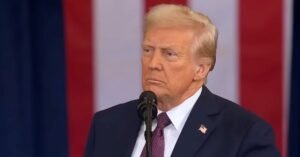

The agreement has already drawn criticism from lawmakers in both parties. Some Republicans argue that Trump may have given Tehran too much leverage after U.S. and allied strikes weakened Iran’s military position. Democrats have also questioned whether the framework gives Iran benefits before securing enough verifiable commitments on nuclear limits and regional behavior.
Administration officials have pushed back on that criticism. Vice President JD Vance has argued that Iran will not receive economic benefits unless it follows through on the agreement’s terms. Vance is also helping lead U.S. talks in Switzerland, where negotiators are working with mediators to turn the framework into a more detailed deal.
The talks are focused on Iran’s nuclear program, sanctions, frozen assets, the Strait of Hormuz and the ceasefire involving Israel and Hezbollah in Lebanon. Reuters reported that the first round of talks produced encouraging progress, though tensions remain high.
The Strait of Hormuz remains one of the biggest tests. Iran has threatened to close the waterway in response to continued regional fighting, while U.S. officials say safe passage has continued. Because the strait is a key route for global oil shipments, any disruption could quickly affect energy prices.
Maher’s criticism reflects a broader challenge for Trump. The president has long sold himself as a master negotiator who can produce better deals than traditional politicians. But the Iran framework is now being judged by that same standard. Critics are asking whether the agreement truly delivers a stronger result or simply pauses the conflict while Iran keeps bargaining power.
Supporters of the deal say a temporary framework is better than a wider war. They argue Trump used military pressure to bring Iran to the table without committing U.S. troops to another prolonged Middle East conflict. Opponents say the deal is too vague and could allow Tehran to rebuild, delay or extract concessions.
For now, the political fight is likely to continue as the 60-day window moves forward. If negotiators secure enforceable nuclear limits and stable regional terms, the White House may claim victory. If talks stall or Iran tests the agreement, Maher’s “not a deal” critique may become part of a larger attack line.
Why It Matters
Maher’s comments matter because they capture a wider criticism of Trump’s Iran framework: that the president’s dealmaking image is now being tested against a temporary agreement with many unresolved details. The debate is not only about comedy or media reaction, but whether the MOU can become a durable foreign-policy success.
What Comes Next
U.S. and Iranian negotiators are expected to continue technical talks during the 60-day window. The White House will need to show progress on nuclear verification, sanctions terms, Lebanon and the Strait of Hormuz if it wants to silence critics who say the framework is too weak.
A clip from Bill Maher’s show highlighted his criticism of Trump’s Iran memorandum of understanding.
Bill Maher: “First of all, it’s not a deal [with Iran]. It’s a memorandum of understanding. It’s about as legally binding as the sign in the break room that says, ‘Please, clean microwave.’”
“It’s nothing… We started with unconditional surrender Operation Epic Fury and now… pic.twitter.com/cD7pl6TYMe
— RedWave Press (@RedWavePress) June 20, 2026