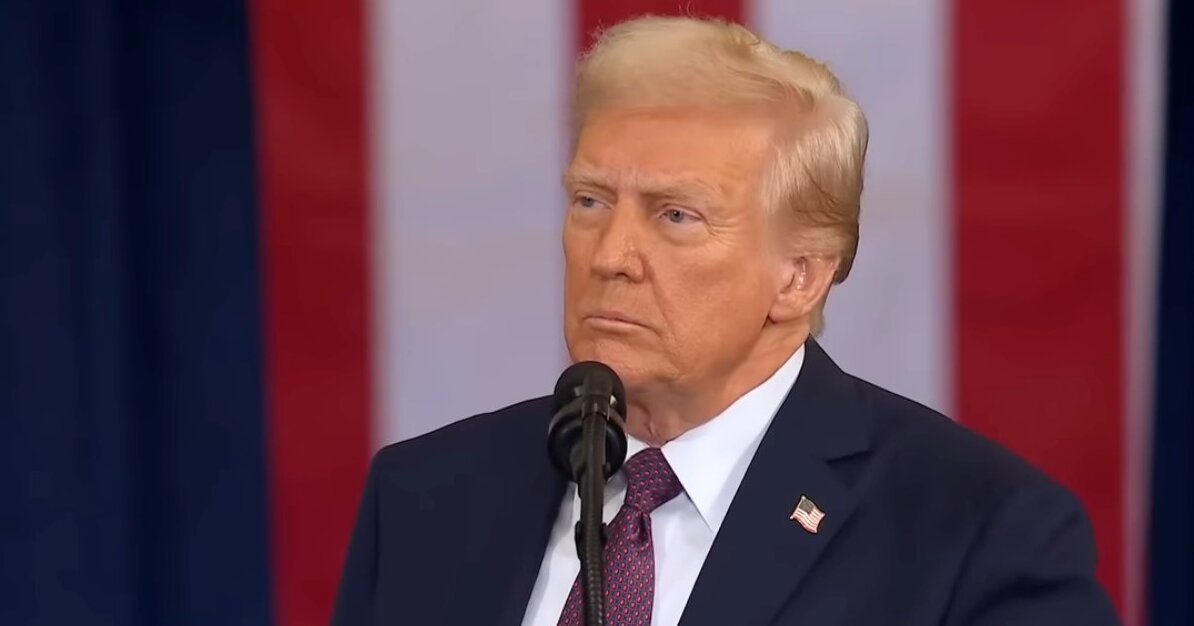
The Kennedy Center’s latest high-profile event became more than a celebration of comedy. It also turned into a public reminder of President Donald Trump’s failed effort to place his name on one of Washington’s most recognizable cultural institutions.
At Sunday night’s Mark Twain Prize ceremony honoring comedian Bill Maher, several performers used the legal fight over the Kennedy Center’s name as material. Trump did not attend the event, but his influence over the venue — and the controversy surrounding his attempted renaming of it — was impossible to avoid.
The dispute began after Trump took control of the Kennedy Center’s leadership structure and installed himself as chair. His allies on the board later moved to rename the venue and add his name to the building. A federal judge blocked that effort, ruling that the name change was unlawful and ordering the removal of the added letters.
By the time guests arrived for the ceremony, the building’s exterior still showed signs of the legal fight. A covering remained in place where Trump’s name had been removed, creating an unusual backdrop for an evening dedicated to political humor and free expression.
TRENDING TODAY

Comedians and actors quickly turned the situation into jokes. Woody Harrelson, speaking in tribute to Maher, mocked the short-lived name change and drew applause from the audience. Other performers also referenced Trump’s role as board chair and the broader tension between the president and parts of Washington’s arts community.
The ceremony came at a complicated moment for the Kennedy Center. Trump’s takeover of the institution has been praised by supporters who believe the arts center should move away from what they see as liberal cultural dominance. Critics argue that the president has politicized a national arts venue that was intended to serve the public, not one administration.
The controversy has already affected programming. The producers of Hamilton canceled a planned run at the Kennedy Center after Trump’s takeover, choosing another Washington venue instead. The move reflected concerns among some artists that the center’s new leadership could influence what productions are welcomed or discouraged.
Maher’s award added another layer to the evening. Known for criticizing both Trump and the progressive left, Maher has built a career on presenting himself as a politically independent provocateur. His recent dinner with Trump at the White House also drew criticism from some liberals who accused him of normalizing the president. Maher has defended the meeting as an attempt to encourage political dialogue rather than endless shouting.
That tension made him a fitting figure for the night. Some guests praised Maher for challenging both parties, while others saw the ceremony as a test of whether comedy can still push back against powerful political figures in a divided country.
For Trump, the Kennedy Center fight is part of a broader pattern of placing his personal stamp on major public institutions and national symbols. His supporters often describe that as a restoration of pride and strength. Critics see it as vanity and an effort to turn public spaces into extensions of presidential branding.
The legal battle is not fully over. Trump allies have suggested the president remains committed to reshaping the Kennedy Center, while opponents are likely to keep challenging moves they believe violate the institution’s mission or legal limits.
For ordinary Americans, the dispute may seem like a Washington personality fight. But it raises a larger question: who controls public cultural institutions, and should those institutions reflect the preferences of a president, a bipartisan public mission, or the broader artistic community?
The Mark Twain Prize ceremony suggested that, at least inside the Kennedy Center that night, artists were not afraid to answer through jokes. The laughter was not only about a name being removed from a wall. It was about the uneasy relationship between political power, public art and the freedom to mock leaders.
Why It Matters
The Kennedy Center controversy shows how cultural institutions can become political battlegrounds. The fight over Trump’s name is not just about branding; it raises questions about public arts funding, presidential influence, free expression and whether national venues should remain independent from partisan control.
What Comes Next
The Kennedy Center board may still decide how far to continue Trump’s renovation and rebranding efforts. Meanwhile, artists, producers and political figures are likely to keep watching whether the venue becomes more closely associated with the president or returns to a less partisan role.
I’m at the Kennedy Center covering the Mark Twain Prize for American Humor. Celebrities are about to walk the red carpet. To do so, they’ll have to go past the tarp tower covering the evidence that President Donald Trump’s name has been removed from the center’s exterior. pic.twitter.com/KMjMT5iAAE
— Jonathan Edwards (@jonathanreports) June 28, 2026