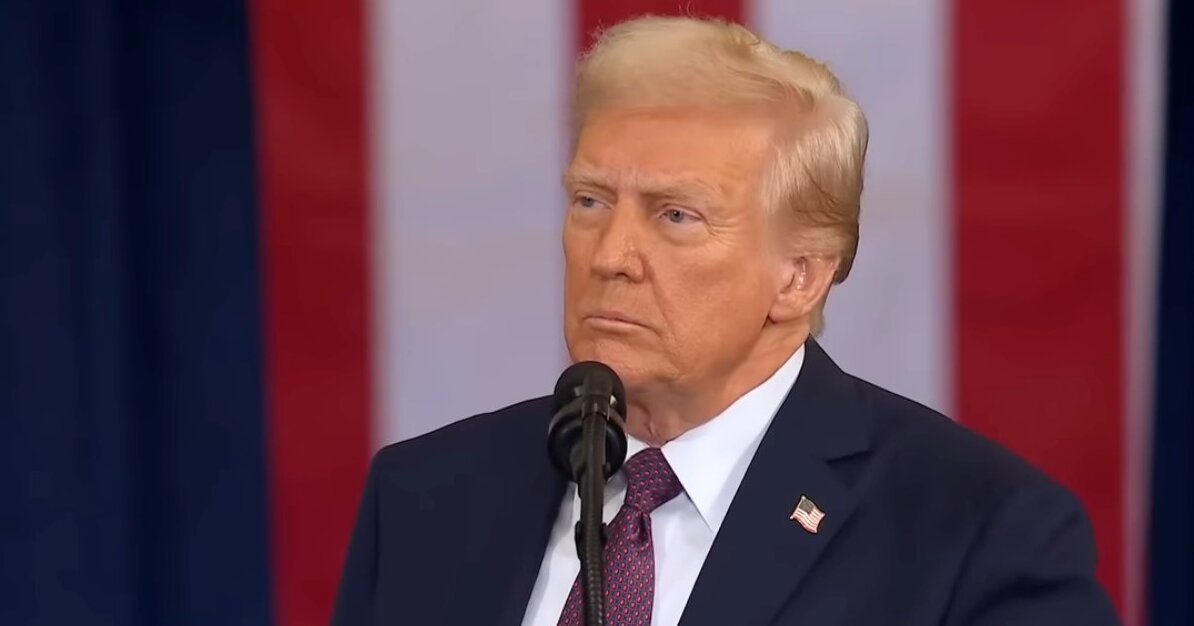
Several social media videos posted by accounts connected to President Donald Trump and the White House have lost their Taylor Swift soundtracks, drawing new attention to the administration’s repeated use of popular music in politically themed online content.
Among the affected posts is an August 3 TikTok showing Trump and first lady Melania Trump watching fireworks. The video originally used Swift’s song “August” and included a caption joking that the singer would be excited her music had been featured. The audio has since been removed from the post.
Another Trump-linked TikTok posted days later played on the title of Swift’s 2012 album Red, connecting the color with the Republican Party and rewriting references to several of her song titles for political messaging. That post has also lost its audio.
At least one older Trump-related video that previously featured Swift’s music has also been muted, according to reporting on the affected posts.
TRENDING TODAY

The removals have prompted speculation online that Swift or her representatives intervened. However, there is an important distinction between what is visible on TikTok and what has actually been confirmed publicly.
Swift has not publicly commented on the latest removals, and neither her representative nor the White House immediately provided an explanation when contacted about the issue. Reuters reported only that some of Swift’s songs had been removed from the videos.
TikTok says sounds can be removed from videos for several reasons, including copyright claims. Its copyright system allows rights holders or their authorized representatives to submit infringement reports, while users can check individual muted videos to determine why a sound was removed.
TikTok also maintains separate rules for commercial use of music. The platform says music from its general library is not automatically cleared for branded or commercial content, while its Commercial Music Library contains tracks specifically licensed for those purposes.
That means the disappearance of Swift’s songs is significant, but by itself it does not establish exactly who requested each removal or what licensing process led to the videos being muted.
The situation is particularly notable because of the political history between Trump and Swift.
Swift endorsed Kamala Harris during the 2024 presidential election. Trump subsequently publicly criticized the singer, including a social media post declaring that he hated her. Despite that history, Trump-affiliated accounts and the White House have continued using Swift’s music and references to her work in social-media content.
The White House has previously used Swift tracks in other posts as well. Reuters reported that an April video involving the Artemis II crew used “High Infidelity,” while a November 2025 post used “The Fate of Ophelia” alongside patriotic imagery and photographs of Trump.
Swift is also far from the only major musician whose work has appeared in Trump administration social-media content.
Artists including Sabrina Carpenter and Ariana Grande have publicly objected to the administration using their songs in videos, particularly those connected with immigration enforcement.
The recurring disputes illustrate a larger challenge created by modern political communication. Campaigns and government accounts increasingly rely on short-form videos, memes and trending music to reach audiences that may never watch a traditional political advertisement.
But music that is easily available to ordinary social-media users is not necessarily cleared for every political, promotional or institutional use. TikTok itself distinguishes between ordinary music access and tracks licensed for commercial content.
That makes music rights an increasingly important part of political social-media strategy. A viral video can reach millions of users quickly, but a rights dispute can also leave that same post muted while generating a second wave of publicity around the disagreement.
In this case, the unanswered question is whether the Swift-related removals resulted from direct action by Swift or her representatives, a record-label or publishing rights decision, TikTok’s own copyright process, or another licensing restriction. No public statement currently establishes that Swift personally ordered all of the music removed.
Why It Matters
The dispute sits at the intersection of entertainment, copyright and political communication.
For artists, political use of their music can create an unwanted impression that they support a candidate or government message. For campaigns and government accounts, popular songs can dramatically increase the reach of social-media videos but may also create licensing disputes.
The muted Swift posts also show how quickly copyright and political messaging can become part of the same viral news cycle, especially when the artist involved has previously taken a public political position.
What Comes Next
The key development to watch is whether Swift, her representatives, TikTok or the White House provides a direct explanation for why the songs were removed.
Trump-related social-media accounts are likely to continue using popular culture as part of their online strategy, meaning similar disputes with musicians and other copyright holders could continue.
For now, the videos themselves remain visible — but several of the Taylor Swift soundtracks that accompanied them no longer do.
Several White House and Trump campaign posts that featured Taylor Swift’s music have since had their audio removed.
Taylor Swift songs removed from White House, Trump campaign posts https://t.co/98MZ6JssqP https://t.co/98MZ6JssqP
— Reuters (@Reuters) August 9, 2026