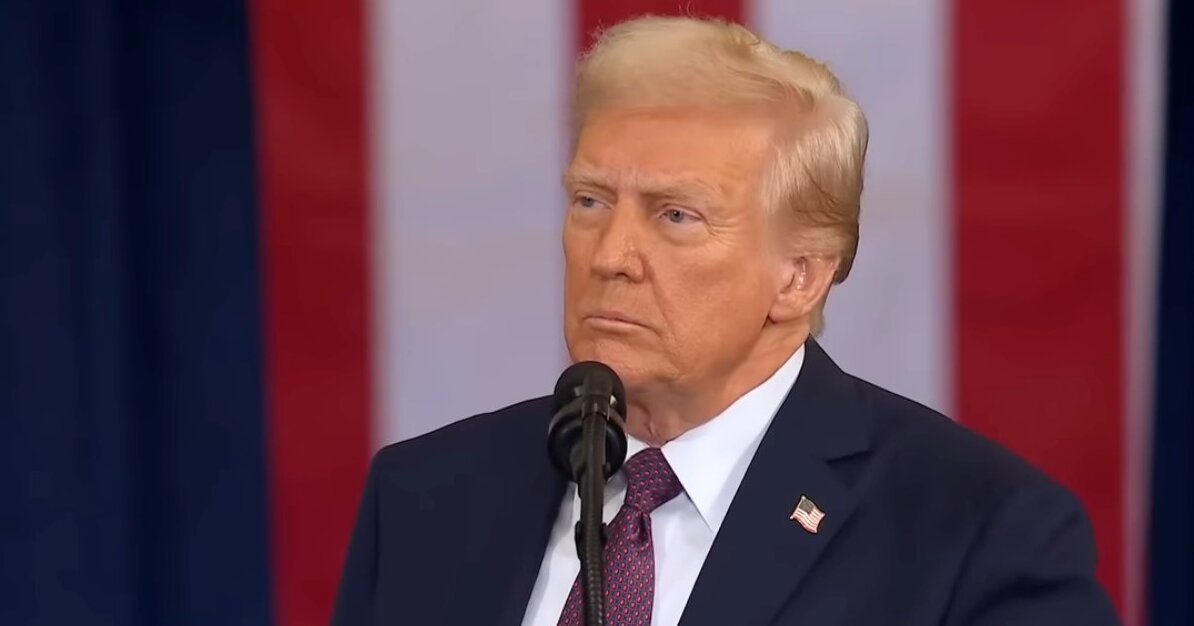
President Donald Trump’s latest executive actions on birthright citizenship are not an isolated immigration initiative. They represent the newest chapter in a political and legal campaign he has pursued for more than a decade — one that is now being reshaped after a major Supreme Court defeat.
Trump signed two executive orders on August 6 aimed at narrowing circumstances in which children born in the United States would receive automatic citizenship and increasing federal action against so-called birth tourism.
The first order identifies several categories the administration argues fall outside the protections of the Fourteenth Amendment’s Citizenship Clause, including some children of foreign government employees, designated hostile foreign actors and parents accused of using commercial arrangements or fraud to obtain citizenship through childbirth in the United States. Federal agencies have been ordered to develop implementation guidance within 30 days.
A second order directs the State Department and Department of Homeland Security to intensify efforts against birth tourism, particularly cases in which officials believe a visitor entered the country primarily to give birth and secure U.S. citizenship for a child.
TRENDING TODAY

The measures came only weeks after the Supreme Court dealt the administration a significant legal setback.
On June 30, the court affirmed that the Fourteenth Amendment provides citizenship at birth to children born in the United States under the broad rule historically applied to the Citizenship Clause, rejecting the administration’s earlier attempt to exclude children based primarily on their parents’ unlawful or temporary immigration status.
That ruling forced the White House to adopt a more targeted strategy.
The administration’s January 2025 order had sought to deny recognition of citizenship to children whose mothers were unlawfully present or temporarily in the country when the father was neither a U.S. citizen nor a lawful permanent resident. The new August orders instead focus on narrower categories the administration argues fit within historical exceptions recognized by the courts.
But Trump’s interest in changing birthright citizenship predates his return to the White House by many years.
During his first presidential campaign in 2015, Trump repeatedly argued that children born in the United States to undocumented immigrants should not automatically receive citizenship. He returned to the subject before the 2018 midterm elections, suggesting at the time that he could potentially alter the policy through executive action.
The constitutional obstacle has always been substantial.
The Fourteenth Amendment declares that people born or naturalized in the United States and subject to its jurisdiction are citizens. For more than a century, courts have generally interpreted that provision broadly, with limited historical exceptions involving circumstances such as children born to diplomats.
Trump and legal thinkers who favor a narrower reading have argued that the phrase “subject to the jurisdiction” should exclude additional categories of noncitizens’ children. Critics counter that such an interpretation would require rewriting a constitutional guarantee that has been recognized for generations.
The June Supreme Court decision strengthened the latter position while still leaving room for disputes over precisely where historical exceptions begin and end.
That distinction explains the administration’s newest strategy. Instead of again attempting a broad restriction covering millions of families based largely on immigration status, the White House is testing specific categories that it says already sit outside the constitutional rule.
Birth tourism has become an especially prominent part of that argument.
Trump has described the practice as widespread, but reliable numbers are difficult to establish because federal agencies do not maintain a definitive count based on a mother’s intention when entering the United States.
The Migration Policy Institute estimates that the broadest census-based calculation would place birth tourism at roughly 22,000 to 26,000 births annually. Government data recorded about 9,600 births in 2024 to mothers whose listed residence was outside the United States, although that figure does not establish why each woman traveled to the country.
The issue is therefore politically powerful but statistically much smaller than some of the rhetoric surrounding it suggests.
Trump has also previously portrayed automatic birthright citizenship as something uniquely American. International data show otherwise. Research published this year found that 32 other countries have systems substantially similar to the United States, while dozens more provide more limited forms of citizenship based on birthplace.
The larger significance of Trump’s campaign may ultimately have less to do with birth tourism itself and more to do with presidential power.
A constitutional right cannot normally be rewritten through an executive order. But presidents can direct federal agencies on how laws and constitutional provisions should be interpreted and enforced — until courts conclude that interpretation exceeds executive authority.
Trump’s latest orders appear designed precisely around that boundary.
Rather than trying to reverse the Supreme Court’s June ruling directly, the administration is attempting to define circumstances it believes the ruling did not protect. Whether courts accept those distinctions will determine whether this strategy succeeds where the broader approach failed.
For families affected by the orders, the consequences would be far more practical than theoretical. Citizenship determines access to U.S. passports, Social Security documentation and the permanent right to live and work in the United States. Any uncertainty over citizenship at birth could therefore create years of legal and administrative complications.
Why It Matters
Trump’s birthright citizenship campaign has evolved from a campaign promise into one of the most consequential constitutional disputes of his presidency.
After losing the broad argument before the Supreme Court, the administration is now testing narrower exceptions. If courts uphold some of them, presidents could gain greater authority to determine who falls outside the traditional understanding of citizenship at birth.
If courts reject the new orders, the decision could further reinforce that major changes to birthright citizenship would require legislation, constitutional change or a fundamentally different interpretation by the Supreme Court.
What Comes Next
Federal agencies must now develop guidance explaining how Trump’s new citizenship order would be implemented.
Legal challenges are also expected, particularly over whether the president can expand historical exceptions to the Fourteenth Amendment through executive action.
Those cases may determine whether the August orders represent a meaningful change in U.S. citizenship law — or another unsuccessful attempt to push beyond constitutional limits already defined by the courts.