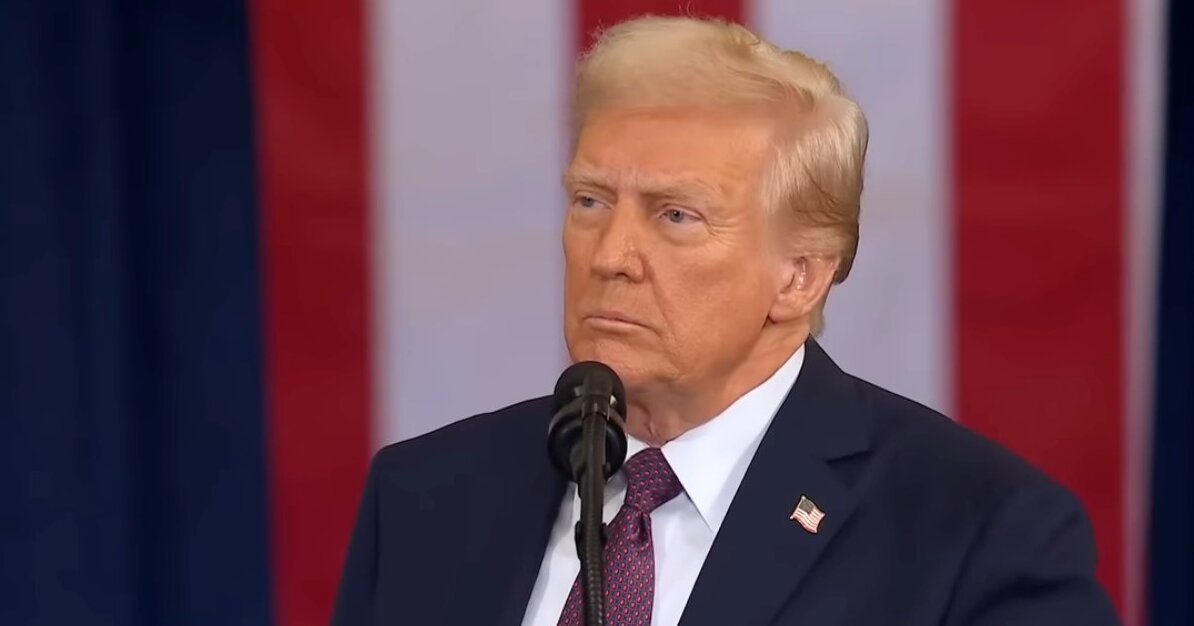
President Donald Trump has halted a planned new round of U.S. military strikes against Iran, saying he expects rapid progress toward an agreement addressing Tehran’s nuclear program and reopening the Strait of Hormuz.
Trump announced the decision after claiming that Iran and several Middle Eastern governments had requested additional time for diplomacy. He said the cancellation remained conditional on reaching an agreement quickly and warned that military action could return if negotiations failed.
Speaking to reporters aboard Air Force One, Trump said negotiations were expected to begin Monday. He did not identify the participants, location or exact format of the proposed discussions, and he declined to establish a deadline for producing an agreement.
However, Iran challenged important parts of the president’s account.
TRENDING TODAY

Iranian officials denied asking Trump to cancel the strikes and said the country’s armed forces remained prepared for further attacks. By Monday, Iran’s foreign ministry said Tehran was not currently engaged in negotiations with the United States, although discussions with Oman over temporary safe passage through the Strait of Hormuz were continuing.
The conflicting statements mean Trump’s announcement should be treated as a military pause rather than evidence that a final peace agreement has been reached.
According to the president, any broader settlement would require the complete reopening of the Strait of Hormuz and measures intended to end what Washington describes as Iran’s nuclear threat. Tehran has not publicly accepted those conditions in the same terms, and no joint statement or signed agreement had been released by Monday.
Iran has instead emphasized its separate negotiations with Oman about managing shipping through the strategically important waterway. Iranian officials maintain that normal access cannot resume while U.S. military operations and restrictions targeting Iran continue.
The strait handled roughly one-fifth of global oil and liquefied natural gas trade before the current conflict severely disrupted shipping. Recent attacks on tankers and competing U.S. and Iranian transit rules have caused many commercial vessels to delay voyages, change course or avoid the area entirely.
Trump’s decision followed appeals for restraint from Gulf governments concerned that a major U.S. attack could trigger Iranian retaliation against oil fields, ports, power stations and other infrastructure across the region.
Saudi Crown Prince Mohammed bin Salman spoke with Trump before the announcement and reportedly urged him to avoid further escalation. Qatar and the United Arab Emirates were also involved in regional diplomatic efforts aimed at preventing a wider conflict.
Those governments have a strong economic and security interest in limiting the fighting. Even countries that cooperate militarily with Washington remain vulnerable to Iranian missiles and drones, while attacks on Gulf energy infrastructure could produce another sharp increase in international fuel prices.
Financial markets reacted immediately to the possibility of reduced tensions. Oil prices fell sharply Monday, with Brent crude dropping below $84 a barrel and U.S. crude falling below $80 during trading. Prices nevertheless remained significantly higher than before the latest phase of the conflict began.
For consumers, a lasting reopening of Hormuz could eventually reduce pressure on gasoline, aviation, shipping and food prices. A temporary pause without restored tanker traffic would probably provide less relief, because insurers and shipping companies may continue charging higher rates until they believe commercial routes are safe.
The latest diplomatic opening follows several previous ceasefires and strike pauses that later collapsed. U.S. and Iranian forces have repeatedly returned to military action after disputes involving shipping access, blockades and the implementation of earlier understandings.
That history means the strongest evidence of progress would not be another public announcement. It would be a written agreement, a sustained halt in attacks and the visible return of ordinary commercial traffic through the strait.
Israel adds another layer of uncertainty. Israeli officials have indicated that the country reserves the right to act if it believes Iran is rebuilding nuclear or ballistic-missile capabilities, regardless of wider diplomatic arrangements. That position could complicate an agreement negotiated primarily between Washington, Tehran and Gulf intermediaries.
Several central questions remain unresolved: whether U.S.-Iran negotiations have formally begun, what nuclear restrictions Tehran would accept, whether Washington would ease its blockade or sanctions, and which side would guarantee safe passage for international shipping.
Trump’s cancellation has reduced the immediate risk of a large attack, but it has not yet resolved the underlying military, nuclear and maritime disputes.
Why It Matters
The Strait of Hormuz is critical to global energy supplies. A credible agreement reopening the route could lower transportation and fuel costs for households and businesses far beyond the Middle East.
The pause may also prevent a broader regional war involving Gulf states and Israel. However, contradictory statements from Washington and Tehran show that the diplomatic process remains fragile and could collapse quickly.
What Comes Next
Diplomats from Oman and other Gulf governments are expected to continue working as intermediaries while Washington seeks direct or indirect discussions with Tehran.
Markets and shipping companies will watch for evidence that tanker traffic is returning safely. The next major test will be whether both sides publish compatible terms, stop attacks for an extended period and establish a practical system for commercial passage through the strait.
Trump Reveals Why Did NOT Strike Iran’s Power Plants and Bridges This Weekend:
“I was asked to by Saudi Arabia, by UAE, and by Qatar, and by Iran. We were all set to go, just about at this time right now, and it would’ve been a massive attack… The reason they asked is they…
— Benny Johnson (@bennyjohnson) August 2, 2026