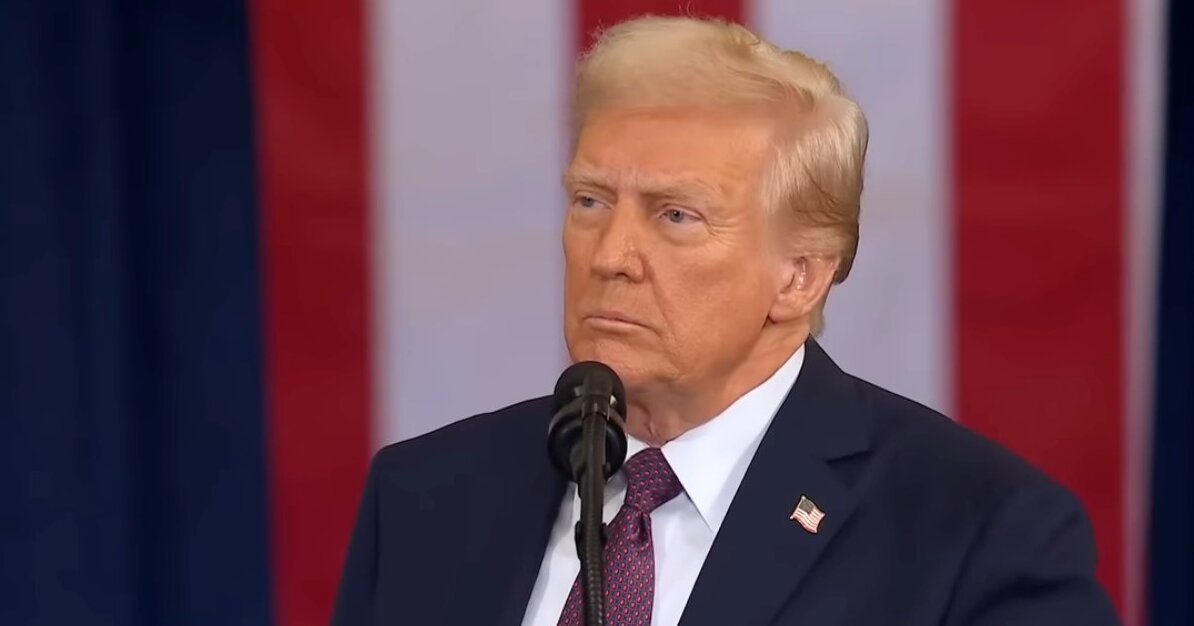
President Donald Trump has renewed his support for a disputed $1.8 billion compensation fund, reversing his earlier statement that the proposal was dead and further complicating Todd Blanche’s nomination for permanent U.S. attorney general.
The Senate Judiciary Committee is scheduled to consider Blanche’s nomination during an executive business meeting on Tuesday, August 4. The vote follows an earlier postponement caused by Republican concerns about the proposed fund and a related legal settlement involving Trump’s tax records.
Blanche, Trump’s former personal defense lawyer, is already serving as acting attorney general. Trump has urged senators to confirm him, praising his performance at the Justice Department and warning that he could withdraw the nomination while allowing Blanche to continue serving temporarily.
The latest dispute centers on the Justice Department’s proposed Anti-Weaponization Fund. Announced in May, the program was designed to receive $1.776 billion from the federal Judgment Fund and consider claims from people who said they had been unfairly targeted by government agencies. The original plan called for a review panel, periodic reports and a deadline of December 1, 2028, for processing claims.
TRENDING TODAY

Supporters describe the proposal as a way to compensate victims of politically motivated government action. Critics—including Democrats, government watchdogs and some Republicans—have called it a potential “slush fund” that could direct taxpayer money to Trump allies, including people prosecuted over the January 6, 2021, Capitol attack.
No court or government investigation has concluded that the proposed fund itself was criminal or corrupt. The dispute is primarily over its design, the potential recipients, the lack of conventional congressional approval and the possibility of political influence over payments.
Blanche previously told senators that the program would not move forward. In written responses submitted to the Judiciary Committee, he said no money had been transferred, no claims had been received and no payments had been made, declaring that the fund was “dead.”
Republican Senators John Cornyn of Texas and Thom Tillis of North Carolina have nevertheless sought stronger, legally binding assurances that the settlement cannot be used to revive the program. They have also objected to provisions reportedly affecting future IRS audits involving Trump, his family and associated businesses.
Their concerns appeared close to being resolved after Trump said during Friday’s Cabinet meeting that the fund was dead, although he added that he wished compensation could still be provided to people he believes were mistreated.
A day later, Trump changed direction. In a social-media post, he said he would “push hard” for legislation creating the fund and suggested it would return to the political agenda if Blanche’s nomination remained blocked. Trump maintained that he would not personally benefit and said the money should assist Americans whose lives were damaged by what he considers abusive government investigations.
Tillis responded that Trump’s latest statement confirmed why a permanent guarantee was necessary. Although Tillis has described Blanche as qualified, he warned that he could not support confirmation while the possibility of reviving the payment program remained open.
The disagreement places Blanche in a difficult position between the president who nominated him and Republican senators whose votes he needs. His assertion that the fund is finished now conflicts with Trump’s public promise to bring it back through legislation or another government action.
Committee Chairman Chuck Grassley has supported Blanche and has highlighted his record at the Justice Department. The White House has also launched a public campaign demanding his confirmation without delay.
However, Republicans hold only a narrow advantage on the Judiciary Committee. Opposition from Cornyn and Tillis, combined with expected Democratic resistance, could prevent the nomination from advancing unless an agreement is reached before Tuesday.
The conflict is no longer only about whether Blanche is qualified to run the Justice Department. It has become a test of whether Republican senators will accept verbal assurances from administration officials when Trump is publicly promoting a different policy.
The episode also raises a broader separation-of-powers issue. Creating a large compensation program through a legal settlement could allow the executive branch to direct substantial public funds without the same debate and detailed restrictions normally attached to legislation passed by Congress.
For taxpayers, the central questions are who would qualify for payments, what evidence applicants would need to provide, who would decide the claims and whether recipients could include people convicted of assaulting police officers or committing other crimes.
It remains possible that Trump could pursue a separate bill while formally canceling the original Justice Department arrangement. That distinction might satisfy senators concerned about executive spending because legislation would require congressional debate and approval. Trump has not yet presented detailed language explaining how a revived program would operate.
Why It Matters
The attorney general oversees federal prosecutions, the FBI and major national law-enforcement policies. A confirmation battle driven by a financial arrangement involving the president could deepen concerns about the Justice Department’s independence.
The proposed program would also involve almost $1.8 billion in taxpayer-backed money. Congress and the public have an interest in knowing who could receive those funds and what safeguards would prevent political favoritism.
What Comes Next
The Senate Judiciary Committee is scheduled to reconsider Blanche’s nomination on Tuesday. Weekend negotiations could produce a written agreement that permanently cancels the original settlement fund while leaving Trump free to seek separate legislation through Congress.
Without an agreement, Cornyn and Tillis could continue blocking the nomination. Trump could then withdraw Blanche’s name, keep him in an acting role or submit the nomination again later.
Trump: Todd Blanche should be approved because you will never get anybody like him. pic.twitter.com/kUhExSJSUE
— Acyn (@Acyn) July 31, 2026