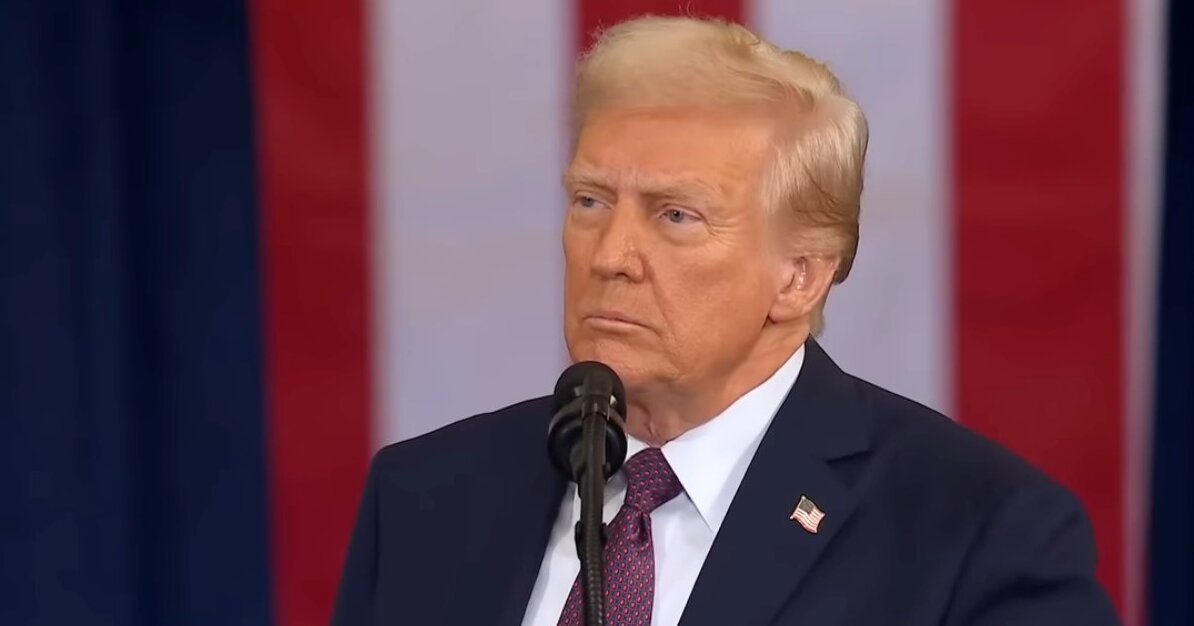
Democratic lawmakers are intensifying calls for President Donald Trump to halt the U.S. military campaign against Iran after several American service members were killed in strikes and related incidents across the Middle East.
The deaths have added new political pressure to a conflict that critics say is expanding without sufficient congressional oversight. Trump, who resumed attacks against Iranian targets after stepping away from a previous understanding with Tehran, is now facing accusations from Democrats that the war is becoming increasingly dangerous and poorly controlled.
The Pentagon identified two soldiers killed in a strike on Muwaffaq Salti Air Base in Jordan as First Lieutenant Tyler James Feehan, 25, of Ewa Beach, Hawaii, and Private Isabella Gonzales, 19, of Carrollton, Texas. U.S. Central Command also reported that another service member died in northern Iraq during what it described as a controlled detonation of unexploded ordnance.
Officials have also reportedly been examining remains found in Jordan that may belong to another service member. The full details of the incidents remain under review.
TRENDING TODAY

Trump called the deaths “a very sad thing” and said the service members died “in service of our country.” Defense Secretary Pete Hegseth said the casualties would not weaken U.S. resolve, describing the fallen troops as heroes.
Democrats, however, argued that the deaths show the conflict is entering a more dangerous phase.
Senator Chris Murphy of Connecticut accused Trump of having “lost control” of the war, warning that the pace of attacks and threats of escalation appeared to be increasing rapidly. Other Democrats said the administration should return to diplomacy before more U.S. troops are placed in harm’s way.
House Democratic Leader Hakeem Jeffries described the campaign as a costly “war of choice” and said American service members had been needlessly exposed to danger. Senator Chris Van Hollen of Maryland, who has supported efforts to require congressional authorization for the Iran campaign, said the war “needs to end now.”
Senator Jeanne Shaheen, the top Democrat on the Senate Foreign Relations Committee, urged Trump to negotiate an end to the conflict, while Representative Ted Lieu called again for Republicans to support a War Powers Resolution.
The War Powers debate is central to the political fight. Both the House and Senate have considered measures aimed at forcing Trump to seek congressional approval for continued hostilities. The White House argues that the legal clock requiring approval has not been triggered in the way Democrats claim, because the fighting was interrupted by a temporary ceasefire earlier in the year.
Democrats dispute that reasoning, saying the president cannot avoid congressional limits by pausing and restarting military action.
The conflict has also raised concerns among lawmakers who receive classified briefings. Senator Mark Warner, the vice chair of the Senate Intelligence Committee, said there had been no imminent threat from Iran justifying the campaign. He also suggested that casualty figures could have been worse, given the scale of recent strikes.
Iran has vowed retaliation against U.S. partners in the Gulf, accusing regional governments of helping Washington conduct attacks on Iranian territory. That threat has increased concern that the war could expand into a broader regional conflict involving U.S. bases, Gulf allies, Israel and Iranian-backed forces.
Republicans have largely defended Trump’s approach. Supporters argue that Iran must face consequences for attacks on U.S. personnel and that a strong military response is necessary to deter further strikes.
Representative James Comer, a Trump ally from Kentucky, said the U.S. must respond forcefully when American troops are killed. Other Republicans accused Democrats of politicizing the deaths while U.S. forces remain in danger.
Still, the political risks for Trump are growing. Public support for the conflict has reportedly weakened as fuel prices rise and casualty reports increase. If more American troops are killed or wounded, the pressure on Congress to assert its constitutional role over war powers could become harder for Republicans to ignore.
The latest deaths also shift the emotional weight of the conflict. Until now, much of the debate centered on strategy, Iran’s nuclear program, regional deterrence and Trump’s authority. The deaths of American service members bring the costs of escalation directly into the homes of U.S. families.
For the administration, the challenge is to show that the campaign has clear objectives, legal justification and a path toward ending. For Democrats, the challenge is to turn criticism into binding action before the conflict grows larger.
Why It Matters
The deaths of U.S. service members make the Iran war harder to frame as a distant or limited military campaign. American families are now paying the price, and lawmakers are asking whether the president has a clear plan or congressional authorization.
The debate also affects U.S. allies in the Middle East, military families, fuel prices and broader regional stability. If the war expands, the consequences could reach far beyond Iran.
What Comes Next
Democrats are expected to continue pressing for a War Powers Resolution that would force Trump to seek congressional approval for the Iran campaign.
The administration will likely continue defending the strikes as necessary for U.S. security. The next major test will be whether Republican lawmakers remain united behind Trump if casualties rise or if more details emerge about undisclosed attacks on U.S. positions.
Trump said the U.S. would respond after American service members were killed and wounded in Iranian strikes.
Every time Iran kills an American Soldier they will pay for that killing many times over! This directive has been passed on to Secretary of War, Pete Hegseth, Chairman of the Joint Chiefs of Staff, Daniel Caine, and every Leader in the Military. President DONALD J. TRUMP
( TS:… pic.twitter.com/UtLRT8G5Gm
— Commentary Donald J. Trump Truth Social Posts On X (@TrumpTruthOnX) July 20, 2026