

A reported strike in southern Venezuela has raised new questions about U.S. involvement, criminal networks and the future of the country’s mineral-rich Amazon region.
The operation reportedly took place near Las Claritas, a mining town close to major gold deposits in Venezuela’s Bolívar state. Residents described a powerful explosion, followed by helicopters circling the area. For several days, few official details were available.
President Donald Trump later posted aerial footage on social media and said it showed the assassination of Héctor Guerrero Flores, also known as “Niño Guerrero,” the alleged leader of Tren de Aragua. The gang, which began in Venezuela and later expanded across parts of Latin America and the United States, was designated by Washington as a foreign terrorist organization last year.
However, key details remain unclear. Authorities have not publicly provided definitive proof that Guerrero Flores was killed. It is also unclear exactly where the strike happened, who launched it, whether other gang figures were targeted, and whether civilians were injured or killed.
TRENDING TODAY


The reported operation is significant because it appears to have taken place on Venezuelan soil, not at sea. The U.S. has previously carried out strikes against alleged drug trafficking vessels in the Caribbean and Pacific, but a land-based strike inside Venezuela would mark a major escalation.
The case is also drawing attention because the operation reportedly involved coordination between the U.S. and Venezuelan authorities. That would represent a dramatic shift in relations after years of hostility between Washington and Caracas.
The strike has placed renewed focus on the Orinoco Mining Arc, a vast region in southern Venezuela known for gold and other valuable minerals. The area has long been affected by illegal mining, armed groups and weak state control. Criminal organizations, guerrilla groups and corrupt local networks have reportedly operated in parts of the region, collecting fees, controlling mines and enforcing order through violence.
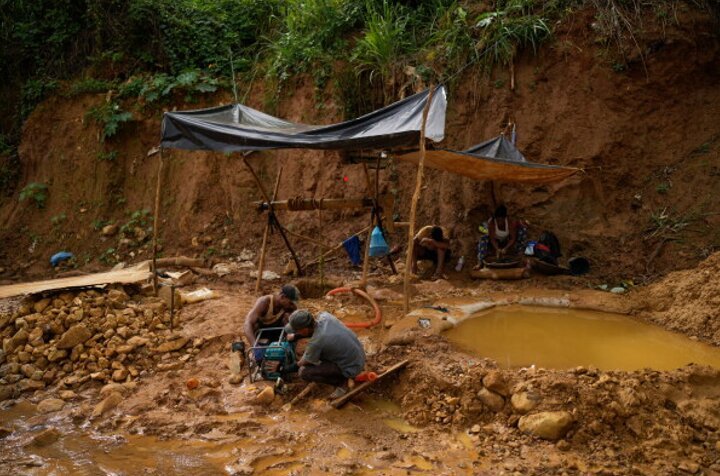
Some analysts believe the strike may have had a purpose beyond targeting one gang leader. The region contains gold, nickel, copper, bauxite, coltan and other minerals important for industrial and military production. Since the political shift in Caracas, Venezuelan authorities have moved to open parts of the mining sector to foreign investment, while U.S. licenses have reportedly allowed certain transactions involving Venezuelan-origin gold.
That has led some observers to ask whether the operation was also meant to make the area safer for future mining investment. U.S. and Canadian companies previously had interests in Venezuelan mining projects before assets were expropriated under earlier Venezuelan leadership. Some companies have shown interest in returning if conditions allow.
Still, experts caution that removing one alleged gang leader would not solve the region’s deeper problems. Armed groups remain active across the mining zone, and some analysts say parts of Venezuela’s military and political networks have long been tied to illegal gold economies.
There are also questions about whether Tren de Aragua’s leadership was truly disrupted. Some local sources reportedly claimed gang leaders may have fled toward Guyana, but those reports remain unconfirmed.
The Trump administration has framed the operation as part of a broader campaign against transnational criminal groups. Critics, however, argue that expanding military action into foreign territory raises legal, diplomatic and human rights concerns, especially when information about casualties and evidence remains limited.
For now, the strike remains surrounded by uncertainty. Trump has claimed a major blow against Tren de Aragua, while experts warn that the criminal economy in southern Venezuela is far larger than one person.
Why It Matters
The operation could mark a new phase in U.S. action against Latin American criminal groups, especially if Washington is willing to support or conduct strikes inside foreign countries. It also raises questions about whether security operations in Venezuela are connected to future access to gold and critical minerals. For residents of the mining region, the concern is more immediate: whether the strike will weaken criminal control or trigger more violence.
What Comes Next
Officials may face pressure to provide clearer evidence about the reported death of Guerrero Flores, the role of U.S. forces and any civilian impact. Investors and mining companies will also watch whether Venezuela’s southern mining zone becomes more accessible or remains too unstable for major projects.
The White House said U.S. forces carried out a strike targeting the alleged Tren de Aragua leader, though questions remain about the operation and its wider implications.
“At my direction, the United States Southern Command delivered a swift and lethal kinetic strike to successfully execute Niño Guerrero, the infamous leader of Tren De Aragua, one of the most bloodthirsty Terrorist Organizations on Planet Earth.” – President DONALD J. TRUMP 🇺🇸 pic.twitter.com/3R5IPxhPXX
— The White House (@WhiteHouse) June 13, 2026





