

President Donald Trump’s recent comments about Taiwan have sparked concern among foreign policy observers who believe his approach to the island may be becoming more transactional after his high-level trip to China.
The debate intensified after Trump suggested Taiwan could be viewed through the lens of broader negotiations with Beijing, raising questions about how far his administration may be willing to shift U.S.-China policy.
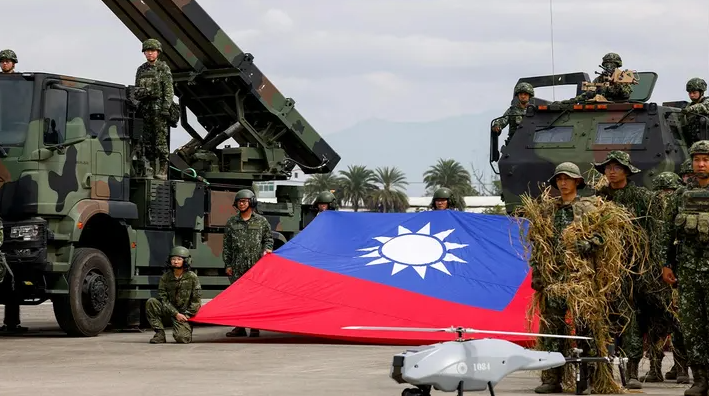
Critics argue that treating Taiwan as a negotiating tool could unsettle American allies in the Indo-Pacific and create uncertainty in Taipei at a sensitive moment.
Taiwan remains one of the most important flashpoints between the United States and China. Beijing claims the island as its own territory, while Washington has continued providing defensive support under a policy of strategic ambiguity.
TRENDING TODAY


Trump has said he does not want Taiwan to assume it has unlimited U.S. military backing if it moves toward independence or triggers a wider confrontation with China.
Supporters of Trump’s approach argue he is trying to avoid war while keeping pressure on both sides to maintain stability.
But critics warn that unclear messaging could encourage Beijing to test U.S. resolve or make Taiwan question whether Washington would stand firm during a crisis.
The issue is also tied closely to global technology supply chains, since Taiwan plays a central role in advanced semiconductor production.
Any conflict involving Taiwan could disrupt global markets, threaten major technology industries and pull the United States into a dangerous military confrontation with China.
Trump’s remarks after the Beijing summit are expected to keep fueling debate over whether his administration is prioritizing diplomacy, leverage or strategic uncertainty in dealing with China.
Donald Trump’s comments since his trip to China suggest that he is taking a much more transactional view of American relations with Taiwan than his predecessors. Register for free to get the full picture: https://t.co/YVAqeaqkYH
Photo: Eyevine pic.twitter.com/7QaBrQYDMV
— The Economist (@TheEconomist) May 18, 2026





