A federal judge in Massachusetts has struck down President Donald Trump’s $100,000 fee on H-1B visa petitions, ruling that the administration exceeded its authority by imposing what amounted to an unauthorized tax on a legal immigration program.
U.S. District Judge Leo Sorokin issued the ruling Monday in a lawsuit brought by 20 states challenging the fee, which Trump announced in September as part of a broader effort to reshape skilled-worker immigration. The H-1B visa program is widely used by technology companies, universities, hospitals and other employers seeking to hire foreign workers in specialized fields.
Sorokin ruled that the $100,000 payment requirement was not a lawful penalty, as the administration argued, because hiring workers through the H-1B program is legal. Instead, the judge found that the fee was structured to raise revenue from lawful activity, making it a tax that only Congress has the authority to impose or delegate.
The ruling invalidated agency guidance, memoranda, website instructions, fee schedules and other documents used to implement the policy. The decision also found that the administration violated the Administrative Procedure Act by failing to follow required notice-and-comment procedures before imposing the fee.
TRENDING TODAY
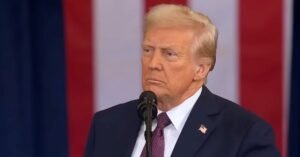

The Trump administration had defended the policy as a necessary measure to protect American workers and curb what it described as misuse of the H-1B program. Trump argued that the visa system had contributed to the replacement of U.S. workers and had created economic and national-security concerns.
But the states challenging the policy argued that the fee was legally unauthorized and economically damaging. They said the sudden $100,000 requirement harmed public employers, universities, medical institutions and businesses that rely on skilled foreign workers.
The judge agreed that agencies could not bypass administrative-law requirements simply because they were following a presidential directive. Sorokin said the government failed to adequately explain the policy, consider alternatives or assess the consequences before putting the fee into effect.
The H-1B program currently provides 65,000 visas per year, with an additional 20,000 reserved for workers with advanced degrees from U.S. institutions. The visas are commonly used for jobs in technology, engineering, medicine, research, finance and higher education.
Before Trump’s proclamation, employers typically paid several thousand dollars in filing and program fees, depending on the type and size of the company. The $100,000 requirement represented a dramatic increase and created uncertainty for employers preparing H-1B petitions.
Court filings showed the policy had already generated limited payments before the ruling. As of Feb. 15, U.S. Citizenship and Immigration Services had received 85 payments of the $100,000 fee, totaling $8.5 million. That figure suggested many employers may have delayed or avoided filings because of the cost.
The ruling is a major victory for states and business groups that argued the fee would disrupt hiring and make it harder to recruit specialized workers. Major technology companies such as Amazon, Microsoft and Apple have historically received large numbers of H-1B approvals, making the program especially important to the tech sector.
At the same time, the decision does not end the broader debate over H-1B visas. Critics of the program argue that some employers use it to reduce labor costs or replace American workers. Supporters say the program helps fill high-skill gaps, supports innovation and keeps the United States competitive in global industries.
The case also carries broader constitutional significance. Sorokin’s ruling reinforces the idea that presidents cannot unilaterally raise revenue through fees or charges that function like taxes unless Congress has clearly authorized them. That issue has become increasingly important as courts review executive actions involving tariffs, immigration fees and other revenue-generating measures.
The Trump administration is likely to appeal. If the case moves to higher courts, it could become another major test of how far a president can go in using immigration authority to reshape economic policy without Congress.
For now, employers, universities and state agencies that rely on the H-1B program will likely treat the ruling as temporary relief. But uncertainty may remain until appeals are resolved or Congress acts directly on visa fees and high-skilled immigration reform.
The ruling also gives critics of Trump’s immigration agenda another legal victory, while supporters of the president are likely to argue that courts are limiting efforts to protect American workers.
The next battle may focus on whether the administration can redesign the policy in a narrower way, pursue the fee through formal rulemaking, or ask Congress to approve new H-1B charges. Until then, the $100,000 fee cannot be enforced under the documents invalidated by the court.
Why It Matters
The ruling matters because it affects employers, foreign skilled workers and industries that depend on specialized labor. A $100,000 fee would have significantly changed the cost of hiring through the H-1B program and could have reduced visa filings from smaller companies, universities and public institutions.
It also matters because the case is about executive power. The judge ruled that the administration could not impose what amounted to a tax without congressional authorization and could not bypass required administrative procedures.
What Comes Next
The Trump administration is expected to appeal the ruling or seek another legal path to defend the policy. Higher courts may be asked to decide whether the fee is an unlawful tax or a valid immigration restriction.
Employers preparing H-1B filings will be watching closely for guidance from USCIS, the Department of Homeland Security and the State Department on how the ruling affects pending and future petitions.
A federal judge struck down a $100,000 fee President Donald Trump ordered for H-1B visa applications, providing a reprieve for US technology companies that rely on hiring skilled foreign workers. Michael Shepard explains https://t.co/iekrWsUBPf pic.twitter.com/OwOPlNq3vQ
— Bloomberg (@business) June 8, 2026