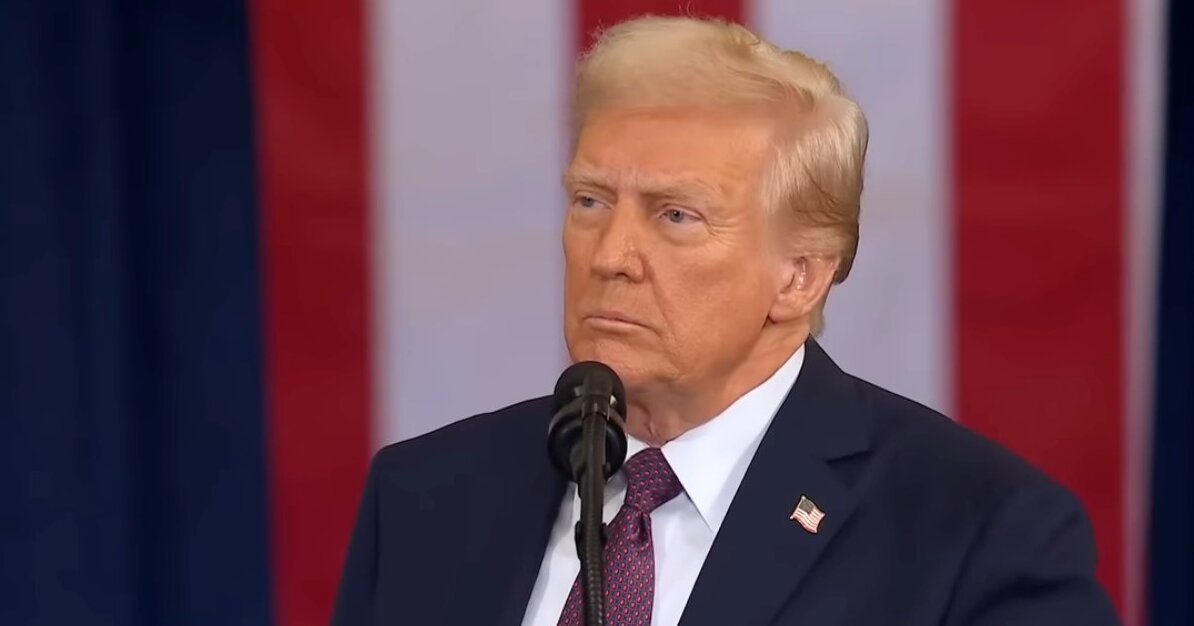
President Donald Trump’s administration is moving to increase scrutiny of financial accounts and transactions it says may be connected to illegal immigration, cartel activity, human smuggling and payroll fraud.
The effort follows a May executive order titled Restoring Integrity to America’s Financial System, which directs the Treasury Department and federal banking regulators to review risks tied to unlawful activity in the financial system. The order points to concerns about money laundering, fentanyl trafficking, human trafficking, identity fraud, shell companies and financial activity allegedly connected to illegal immigration networks.
The Treasury Department’s Financial Crimes Enforcement Network, known as FinCEN, has since issued an advisory urging banks and other financial institutions to watch for suspicious activity patterns. The advisory identifies red flags that may indicate payroll fraud, identity theft, money laundering or employment schemes involving unauthorized workers.
The policy does not mean every immigrant’s bank account will automatically be closed. According to the Associated Press, the guidance stops short of requiring banks to collect citizenship information from all customers. Instead, it encourages financial institutions to monitor for suspicious patterns and report activity that may involve unlawful employment, trafficking, smuggling or fraud.
TRENDING TODAY

Treasury Secretary Scott Bessent has framed the move as part of a broader effort to prevent criminal networks and unauthorized actors from exploiting the U.S. financial system. Supporters argue that banks should not be used to move money tied to cartel operations, labor trafficking, identity theft or taxpayer-funded benefit fraud.
The White House has also argued that extending credit products such as mortgages, credit cards and auto loans to people who may face removal or loss of wages can create structural risks for lenders and the banking system.
Trump has taken a sharper public tone, saying on Truth Social that bank accounts used to enable illegal immigration or store welfare benefits received by undocumented immigrants should be shut down. He also suggested that funds connected to unlawful activity could face impoundment, seizure or forfeiture.
Those claims are likely to draw legal and regulatory scrutiny. Banks already operate under anti-money-laundering rules and know-your-customer requirements, but they generally verify identity rather than immigration status. Any move requiring broader immigration-status checks could create major compliance challenges and likely face pushback from banks, immigrant-rights groups and consumer advocates.
Reuters previously reported that banks were concerned a citizenship-data requirement could be costly and difficult to implement. Industry officials warned that such rules could require new systems, staff training and complex document reviews, especially for customers with visas, mixed-status households or limited paperwork.
Critics also warn that the policy could lead to over-reporting or unfair account closures if banks become overly cautious. Consumer advocates argue that immigrants, legal residents and lower-income customers could be wrongly affected if financial institutions misinterpret guidance or treat immigration-related documents inconsistently.
Supporters respond that the order is focused on criminal networks, not ordinary lawful banking. They say the administration is targeting schemes involving fake businesses, concealed payrolls, labor brokers, cartel transfers, identity theft and improper public benefit payments.
The FinCEN advisory reportedly includes examples of red flags, such as unusual payroll patterns, shell-company activity, use of foreign identification in suspicious contexts, and transactions that may indicate unauthorized labor networks. FinCEN also cautions that red flags alone do not prove wrongdoing and should be assessed with the full context of a customer’s activity.
That distinction will be important as the policy moves from political messaging into banking compliance. Financial institutions will need to balance enforcement expectations with fair-lending rules, consumer protections and anti-discrimination obligations.
The administration is expected to issue additional guidance as agencies translate the executive order into practical compliance standards. Until then, the scope of enforcement remains a key question.
For now, Trump is presenting the move as part of his broader immigration crackdown and anti-fraud agenda. Banks, regulators and civil-liberties groups are watching closely to see whether the policy becomes a targeted financial-crimes effort or a wider push to restrict access to banking based on immigration status.
Why It Matters
The policy matters because it could change how banks monitor accounts, verify customers and report suspicious activity connected to immigration-related financial schemes.
It also matters because the U.S. banking system depends on access, trust and clear rules. A narrow focus on criminal networks could strengthen enforcement, while an overly broad approach could risk wrongful account closures and legal challenges.
What Comes Next
Treasury and FinCEN are expected to provide more guidance to banks and financial institutions in the coming weeks.
The biggest questions are whether the administration will push for broader immigration-status checks, how banks will interpret the red flags, and whether consumer groups or immigrant-rights organizations challenge the policy in court.
🚨 JUST IN: President Trump announces executive order directing Sec. Scott Bessent to *SHUT DOWN* bank accounts used to facilitate illegal immigration or to give illegal aliens welfare
Trump is moving to DE-BANK illegals
LET’S GO, LONG OVERDUE 🔥
“Funds will ultimately face… pic.twitter.com/mpIxt7cm39
— Eric Daugherty (@EricLDaugh) June 2, 2026